
Category: All

  • The Global Commission on the war on drugs and HIV/AIDS

    The Global Commission on the war on drugs and HIV/AIDS

    On June 26th, the Global Commission on Drug Policy released a groundbreaking report on the war on drugs and its failures. Titled “The war on drugs and HIV/AIDS: How the criminalization of drugs fuels the global pandemic”, the report focuses on the relationship between drug policy and the spread of HIV.

    Global Commission Report Launch with Michel Kazatchkine, Ruth Dreifuss and Ilona Szabó
    Global Commission Report Launch with Michel Kazatchkine, Ruth Dreifuss and Ilona Szabó

    Covering a range of issues directly connected to the HIV and AIDS pandemic, the report points out the inability of law enforcement to reduce global drug supply. In fact, the global supply of illicit opiates, such as heroin, has increased by 380% in recent decades. And it describes how repressive drug control policies actually drive the HIV epidemic in many regions of the world. The report also details how policies that prohibit needle exchange increase syringe sharing and the risk of HIV infections, and how the fear of arrest drives people underground and away from needed services. It urges countries to scale up proven drug treatment and public health measures, including harm reduction services, to reduce HIV infection and protect community health and safety.

    Canada often prides itself on being a positive and progressive force on the international stage. But politics, rather than evidence, tend to be the deciding factor in defining Canadian drug policy. As the Global Commission’s report explains, mass incarceration also drives the HIV pandemic. The recent passage of the Omnibus Crime Legislation prescribes mandatory minimum penalties for some drug crimes. This will have the effect of driving up incarceration rates in Canada’s already crowded prisons, and as the Canadian HIV/AIDs Legal Network recently pointed out, the lack of needle exchange programs in Canadian prisons contributes to the spread of HIV and endangers public health.

    The report also documents how the fight against HIV is being won in countries where problematic substance use is treated as a health issue. In Australia and European countries such as Portugal and Switzerland, newly diagnosed HIV infections have been nearly eliminated among people who use drugs.

    The Global Commission members are no lightweights when it comes the development of governmental policy. The Commission comprises a distinguished group of high-level leaders whose ranks include George Schultz, former US Secretary of State, Richard Branson, founder of the Virgin Group and advocate for social causes, and Ruth Dreifuss, former President of Switzerland, among many others.

    This is the second report released by the Global Commission. Its first report, released in June 2011, catalyzed international debate about the urgent need for fundamental reforms of the global drug prohibition regime. It recommended implementing reforms such as alternatives to prison, a greater emphasis on health approaches to drug use, decriminalization, and experiments in drug regulation that avoid the negative effects of full prohibition.

    With widespread media coverage around the world, the report has pushed the topic of drug policy reform back into focus just in time for the International AIDS 2012 Conference, taking place in Washington, DC, later this month. Stressing the need for urgent action, the Global Commission makes a number of recommendations to world leaders and the United Nations, the most fundamental of which being that they acknowledge and address the causal link between the war on drugs and the spread of HIV.

    For more information see:

    Global Commission on Drug Policy: http://www.globalcommissionondrugs.org/
    Canadian HIV/AIDS Legal Network: http://www.aidslaw.ca/EN/index.htm

    Read the Report

  • Director’s Report

    Director’s Report

    The past three months have been a blur of activity as we further establish our presence and connect with organizations and individuals across the country and around the world. There truly is something bigger going on and momentum is building towards considering new and innovative approaches to addressing drug problems.

    Mexico Unido Contra la Delincuencia
    Mexico Unido Contra la Delincuencia

    In February, I was invited to speak at an international conference in Mexico City – Drogas: Un balance a un siglo de su prohicion, organized by the crime prevention group Mexico Unido Contra la Delincuencia. The forum provided a thorough consideration of possible alternatives to the devastating consequences of the Mexican government’s war on drugs. Speakers came from around the world to share stories of innovation, legislative changes and practices that have moved their drug policies towards a public health approach and away from a failed criminal justice model.

    Integrating Supervised Injection Into Health Services and Community: A National Knowledge Exchange

    CAHR 2012 Montréal
    CAHR 2012 Montréal

    In April, CDPC organized a forum on supervised injection services in partnership with the Dr. Peter Centre in Vancouver and Cactus Montreal as an ancillary event at the Canadian Association of HIV Research meeting in Montreal. The event was held in the beautiful Biblioteque et Archive National du Quebec and was a chance for organizations to share their experiences and review the current state of the discussion in their jurisdictions. CDPC will be working with a number of organizations to keep this national discussion moving forward as different localities explore implementing these services.

    North American Drug Strategy Meeting – San Francisco, April 12, 13

    San Fransisco
    San Fransisco

    As part of CDPC’s international work we co-hosted a meeting in partnership with the Drug Policy Alliance in the US and CUPHID from Mexico City to explore the development of a coordinated North American drug policy dialogue. The San Francisco meeting was the initial exploratory session to see how we can work together to bring forward alternatives to North America’s current drug policies. In an effort to strengthen our ties across the continent, CDPC is currently looking for Canadian allies interested in supporting our work in Mexico.

    Visit to the Maritimes

    People & Policies Conference Halifax
    People & Policies Conference Halifax

    As part of our ongoing efforts to build a national coalition I visited Atlantic Canada in May, attending events and meetings in Halifax, Saint John, New Brunswick and Charlottetown. Atlantic Harm Reduction Research Network invited CDPC to be a part of their public session – People and Policies: How do Drug Policies Impact the Health of our Communities? In addition to this, a day-long session with service providers and researchers also considered how best to integrate harm reduction services into shelter and emergency ward settings.

    In Saint John, NB, AIDS Saint John, the Urban and Community Studies Institute at University of New Brunswick and CDPC co-hosted an event – Drugs and the City, which featured a panel discussion on drug policy with Tim Christie, Ethics Director, Saint John Health Region and Bill Reid, Chief of Saint John Police Department.

    In Charlottetown, I met with a number of parents who are concerned about the lack of youth treatment on the Island and are interested in organizing a provincial “addictions movement” to generate discussion, share experiences and engage the provincial government in dialogue on improving services for people with drug problems.

    Thunder Bay Municipal Drug Strategy

    Pot, Pills and Parties Thunder Bay
    Pot, Pills and Parties Thunder Bay

    On May 24th Canadian Students for Sensible Drug Policy and Thunder Bay Drug Strategy put on the event – Pot, Pills and Parties. The event focused on the impact of Bill C-10 on young people and included a presentation from CDPC – Changing the Frame: A New Approach to Drug Policy in Canada.

    As CDPC reaches out across the country we are finding new and innovative ways to strengthen and build our national coalition to improve Canada’s approach to drug problems. We will continue to engage Canadians and work at the international level towards this end.


    Photo Credits:
    Mexico – Steve Rolles
    Montréal – Caroline Mousseau
    San Fransisco – CC Flickr evoo73
    Halifax – Wooden Shoe Photography

  • If you can spell it, you can schedule it.

    If you can spell it, you can schedule it.

    That’s the intention of Canada’s federal government.
    Namely, to include methylenedioxypyrovalerone (MDPV), a synthetic substance that causes stimulant-like psychoactive effects, in Schedule I of the Controlled Drugs and Substances Act. At least that’s the proposal formally announced in the Canada Gazette on June 9, 2012. This follows Health Minister Leona Aglukkaq’s announcement that the drug would be banned because of “recent media reports [that] have linked the use of ‘bath salts’ to violence causing harm.” Interested parties have until July 8, 2012 to comment (details below).

    mdvp_thumbAs the Canadian Centre on Substance Abuse so carefully noted, “bath salts are not salts that go in your bath.”

    Rather, it’s the common name given to MDPV, one of the possible ingredients in a substance available for sale, but as of yet, not regulated in Canada, unlike many of its amphetamine-like cousins already prohibited in Schedule III.

    The government’s claim that bath salts are linked to violence stems from highly sensationalistic reporting of a tragic assault case in Miami where a man was shot and killed by police while apparently eating the face of another man. Miami police officials speculated that this attack was caused by the use of bath salts, though toxicology tests won’t be ready for a few weeks. Nor do they care that the man at the centre of this story had a history of violence, according to Kate Heartfield in the Ottawa Citizen.

    The move to ban MDPV comes amid a news cycle in which numerous stories purport to detail the effects of its use, including a segment of CBC’s The Current with Anna Maria Tremonti on May 30th. The Current marshaled interviews from Halifax with a former bath salts user and an addictions treatment doctor to underscore the supposedly uniquely dangerous effects of this drug and give it a homegrown spin. Sound familiar? It should. Similar “drug scare” narratives have been constructed around the popularization of numerous substances, including crystal meth, PCP, crack, speed, LSD, heroin, reefer and of course, opium.

    bathsaltsThe rush to ban MDPV and place it in Schedule I will mean that the harshest drug law penalties can be applied to people who use, traffic or produce this drug. As researchers have noted, the banning of drugs like Mephedrone often drives its use and manufacture further underground, inflates the price and prevents the implementation of potentially helpful forms of regulation. Prohibiting substances has not made people safer, and has not resulted in the elimination of drug use. It can also displace drug use back to traditional illegal drugs, or to newer, potentially more dangerous “legal highs.”
    We don’t want to ignore the voices of people who have negative experiences with MDPV but neither do we want to rush to ban this drug. In this case, it’s a political response that can placate worried voters but it also alleviates politicians of the responsibility to meaningfully address the underlying causes of problematic substance use.  We urge you to express your concerns about this ban.

    Comments on this proposed change can be directed to Mr. Nathan Isotalo, Regulatory Policy Division, Office of Controlled Substances, Address Locator: 3503D, 123 Slater Street, Ottawa, Ontario K1A 0K9, by fax at 613-946-4224 or by email at OCS_regulatorypolicy-BSC_ politiquereglementaire@hc-sc.gc.ca.

    For more information see: Curiosity killed M-Cat: A post-legislative study on mephedrone use in Ireland, Marie Claire Van Hout1 & Rebekah Brennan. Drugs: education, prevention and policy, April 2012; 19(2): 156–162.


  • Canadian Nurses lead the way in harm reduction

    Canadian Nurses lead the way in harm reduction

    Nurses from across the country will be gathering in Vancouver at the Canadian Nurses Association Biennial Convention this week. As part of the occasion Insite and the Dr Peter Centre are each hosting special sessions on June 17th, providing opportunities for knowledge exchange on harm reduction policies and nursing practice.

    Canadian nurses recognize that substance use, both legal and illegal, is an enduring feature of human existence and that abstinence is not always a realistic goal. As such, nurses focus on reducing adverse consequences and building non-judgmental, supportive relationships for the health and safety of individuals, families and communities.

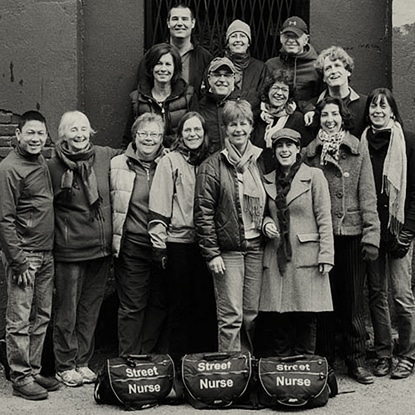
    Screen-shot-2012-06-14-at-6.53.20-AMThere is a risk that the image of nurse-supervised injection is limited to a nurse hovering over a client while the injection takes place and nothing more occurs. I want to dispel this image.

    The nurses of Insite have articulated their framework of nursing practice. Nursing care is client-centred with the focus on relationship building, maintaining dignity and respect, and creating an environment of cultural safety and empowerment. Primary nursing care at Insite includes safer injection education, needle-syringe exchange, first aid, wound care, overdose management, addiction treatment, reproductive health services and communicable disease prevention. These services are delivered as comprehensive harm reduction and health promotion programming nested in partnerships with the health and social service systems and community agencies.

    In 2011 the Canadian Nurses Association released a discussion paper on Harm reduction and currently illegal drugs: implications for nursing policy, practice, education and research, which was endorsed by the Canadian Association of Nurses in AIDS Care. The values of harm reduction are consistent with the values guiding professional ethical nursing practice articulated in CNA’s Code of Ethics for Registered Nurses for the provision of safe, ethical, competent and compassionate nursing care; for the promotion of health and well-being; for the promotion of and respect for informed decision-making; for the preservation of dignity in which care is provided on the basis of need; and for the promotion of justice.

    Considering this it really shouldn’t come as a surprise that Canadian nurses support harm reduction services. The origins of outreach nursing have been attributed to the Grey Nuns, founded by Marguerite d’Youville in Montreal, who by the mid 1700’s, were known for their care to the destitute. Inequity of access to health care and the basic determinants of health has led to “street nursing” practices in many urban centres.

    Lightfoot-etal_09_Gaining-Insite Harm_Reduction_2011_e Hardill

    BCCDC-STI Street Outreach Nurse Program
    BCCDC-STI Street Outreach Nurse Program

    In Vancouver, after World War II nurses led a major effort to reach marginalized people who would not attend hospitals for the treatment of sexually transmitted diseases. In 1988 the BC Centre for Disease Control established the AIDS Prevention Street Nurse Program with a focus on needle and syringe exchange. With the epidemics of overdose deaths and the dramatic outbreak of HIV that Vancouver experienced in the 1990’s, the street nurses were some of the first to advocate for bringing injecting from the alleys into the safety of a supervised injection health service.

    Just over one year ago, professional associations – Canadian Nurses Association, Registered Nurses Association of Ontario and Association of Registered Nurses of British Columbia and BC Nurses Union each acted as intervenors in support of Insite at the Supreme Court of Canada. Nurses across Canada cheered when the Supreme Court ruled in favour of Insite remaining open.

    Look for nurses to be leaders in advocating for the expansion of supervised injection services locally, nationally and globally!


  • New Provincial Guidance for Supervised Injection Services in BC

    New Provincial Guidance for Supervised Injection Services in BC

    Supervised injection sites help save lives and protect communities. This was the conclusion of over 30 research studies on Vancouver’s own supervised injection site known as Insite. And Canada’s Supreme Court agreed in September 2011, ordering the federal Minister of Health to grant a section 56 exemption to the Controlled Drugs and Substance Act to allow Insite to continue to operate.

    To scale up harm reduction and support the development of similar services throughout the province, the BC Ministry of Health has now revised its Guidance Document for Supervised Injection Services. Written for health care professionals, it provides advice to health authorities and other organizations considering supervised injection services in their local areas.

    Kenneth Tupper - B.C. Ministry of Health
    Kenneth Tupper – B.C. Ministry of Health

    At a recent public forum in Victoria, BC, Kenneth Tupper of the B.C. Ministry of Health affirmed the value of supervised injection as part of a “comprehensive program of harm reduction services.”

    “The courts have ruled that supervised injection is a valuable approach to health care,” Tupper said, “and the new Guidance Document affirms the province’s support of these services.”

    The “guidance document” could seem daunting for the uninitiated. It spells out a range of issues that should be covered by any organization considering a supervised injection site. This includes extensive knowledge of the local services, rates of HIV and Hepatitis C and any available estimates of drug use patterns. Interested organizations will also need to provide a detailed description of the proposed service and demonstrate how it will be consistent with the principles of harm reduction as spelled out by the B.C. Ministry of Health documents.

    According to provincial policy, anyone who wants to offer this service will need to consider how they will sustain the support of local groups like medical health officers, police departments and other potentially interested groups. They will also need to plan services to be offered in conjunction with supervised injection even if the proposed supervised injection site is small or mobile and carefully consider how client data will be collected and how issues like the risks of substance use and expectations for conduct at the service are to be communicated and documented.

    ‘Harm reduction’ refers to policies, programs and practices that aim to reduce the negative health, social and economic consequences of using legal and illegal psychoactive drugs, without necessarily reducing drug use. Scaling up harm reduction for individuals, families and communities is core to the work of the CDPC.

    We hope you will join us and help spread the word about the importance of services like supervised injection and help us scale up harm reduction in our communities.


  • Dr. Mark Tyndall – Supervised Injection sites are the lightning rod of harm reduction

    Dr. Mark Tyndall – Supervised Injection sites are the lightning rod of harm reduction

    I sat down with Dr. Mark Tyndall at the 21st Annual Canadian Conference on HIV/AIDS Research(CAHR) in Montreal this April. The theme of the conference was turning points and meeting new challenges. Tyndall is no stranger to confronting challenges and he is known as a national leader in HIV prevention and care. He worked for over a decade in Vancouver at UBC and the BC Centre for Excellence in HIV/AIDS, also as the head of Infectious Diseases at St. Paul’s Hospital. He now calls Ottawa home and serves as the head of Infectious Diseases at the University of Ottawa.

    “supervised injection sites have become a lightning rod of harm reduction, but we all know and recognize that they are a very important way to try and engage people in some kind of continuum of care…and the need is still quite large.”

    Having been at the forefront of Vancouver’s supervised injection site (INSITE), Tyndall knows that supervised sites and harm reduction services need to be scaled up.

    Tyndall says that there is a public health crisis in Ottawa, similar in some cases to what he saw in Vancouver a decade ago. The big question he asks is, do we need to repeat the same research process and make many of the same mistakes, or can we learn from places like Vancouver, Frankfurt, and Sydney and implement harm reduction and supervised injection sites efficiently. Tyndall was a speaker at a press conference we held in Montreal during CAHR looking at injection sites Nationally, and he also contributed to the Toronto Drug Strategy report that we wrote about this spring. Please get connected and leave your comments to let us know what you think needs to happen in your community.

  • Health authority releases new cannabis harm reduction resource

    Health authority releases new cannabis harm reduction resource

    Last week, Vancouver Coastal Health and the University of Victoria’s Centre for Addictions Research of BC published a valuable resource for individuals who use cannabis recreationally. 

    Take Care with Cannabis is a user friendly, concise, accessible one-page information source that outlines the potential risks of smoking and ingesting cannabis. Intended to protect the well being of individuals, Take Care with Cannabis provides insight into the impact of using the plant on a smoker’s lungs, cognitive abilities, and brain development during adolescence and early adulthood.  It discusses how to stay safe when using cannabis and how to avoid toxic effects.

    Take Care with Cannabis
    Take Care with Cannabis

    John Carsley, Medical Health Officer for co-author Vancouver Coastal Health said,

    “It’s our responsibility as health care professionals to ensure that anyone who chooses to use cannabis has clear information about how they can take better care when using.

    While cannabis is illegal in Canada, the reality is that a significant portion of the population uses it. And when they use it, it’s our desire to see them be as safe as possible.”

    ‘Harm reduction’ refers to policies, programs and practices that aim to reduce the negative health, social and economic consequences of using legal and illegal psychoactive drugs, without necessarily reducing drug use. Raising awareness about the realities and benefits of harm reduction for individuals, families and communities is core to the work of the CDPC.

    We know that the more informed people are, the more support there will be within communities for a comprehensive approach to reducing the harm from drug use.

    We hope you will join us to get the word out and help scale up harm reduction in communities across Canada.


  • Groundbreaking EU study supports use of heroin-assisted treatment

    Groundbreaking EU study supports use of heroin-assisted treatment

    On Friday, the European Monitoring Centre for Drugs and Drug Addiction (EMCDDA ) released a groundbreaking report examining heroin-assisted treatment for chronic heroin users, once thought to be untreatable.

    heroin
    Photo Credit: Jay Black

    The report, New heroin-assisted treatment, provides the first state-of-the-art overview of research, examining the latest evidence and clinical experience on the topic in Europe and internationally. The findings show that for the small minority of entrenched opioid users who repeatedly fail to respond to prescriptions of other substitute drugs such as methadone, supervised use of medicinal heroin can be an effective second-line treatment.

    The study’s findings show that Supervised Injectable Heroin (SIH) treatment can lead to: the ‘substantially improved’ health and well-being of this group; ‘major reductions’ in their continued use of illicit ‘street’ heroin; ‘major disengagement from criminal activities’, such as acquisitive crime to fund their drug use and ‘marked improvements in social functioning’ (e.g. stable housing, higher employment rate).

    From the report:

    ‘New heroin-assisted treatment is an issue that has attracted much attention, controversy and often confusion’, says EMCDDA Director Wolfgang Götz. ‘With Europe at the forefront of investigating and implementing this novel approach, the EMCDDA is proud to present the findings of the major contemporary research studies on the topic and the clinical and policy experiences of countries providing it. Our purpose in doing this is not to advocate, but to inform. We hope that this report will help policymakers and practitioners draw their own conclusions about this type of treatment within their own national context’.

    What do you think about expanding heroin-assisted treatment to communities in Canada?  Do you think it’s time to scale up harm reduction and provide evidence-based treatment options for our most entrenched drug users?  We want to hear from you.


  • Mark Haden: A Drug Educator’s Apology

    Mark Haden: A Drug Educator’s Apology

    Mark Haden is a drug educator. He has spent the last twenty-five years providing public education on drugs and working with addiction counselling services in Canada. Today he works as a supervisor at the Pacific Spirit Community Health Centre in Vancouver.

    Haden knows that the Canadian Federal government spends approximately six million dollars a year educating parents, teachers, young people, law enforcement and communities about the risks and laws surrounding substance use. He also knows that drug education plays a key role in defining our relationships to mind altering substances.

    “We have overemphasized the harms of drugs, we have neglected to mention the benefits of certain drugs and we have omitted mentioning the harms that drug prohibition causes….”

    Reflecting on the complexity of the relationships we have to drugs, Haden feels that we do a disservice to young people by perpetuating certain myths and maintaining a system that fails to achieve healthy results. During a brief interview in his office, Haden suggested a number of regulatory tools that could be useful in redefining our relationship to drugs and drug education. He advocates for a public health approach that is rooted in human rights and harm reduction and proposes an alternative to prohibition and criminalization.

    Haden is adamant that it is time to explore alternate regulatory frameworks that will actually make certain drugs harder to attain for young people, not easier. He admits that different drugs have different properties and risks and suggests that we consider each one separately, with different approaches taken to reducing the harms of each drug.

    Haden believes that if we can open up discussion about drug use and create public health policies, we can also begin to develop healthy social norms that can minimize their associated harms. “We don’t drink alcohol with breakfast,” he says. If we stop the violence of prohibition and start telling the truth about drugs, then we can begin to develop healthy social habits around drug use.

    Mark’s website has an extensive list of regulatory tools as well as many more resources for understanding and shifting our relationship to drugs towards a public health approach.