Category: All

  • How Does NAFTA Impact Drug Policy?

    How Does NAFTA Impact Drug Policy?

    What does the North American Free Trade Agreement have to do with drug policy? At first glance they might seem like unrelated topics. But as the Caravan4Peace makes its way across the southern United States, we in Canada have a chance to pause and reflect on how our policies might be making the effects of the war on drugs on the U.S./Mexico border that much worse.

    Trade agreements like NAFTA are touted as the key to dynamic growth in nations like Mexico and Canada. But a policy brief from the Carnegie Endowment for International Peace suggests that agreements between trading partners don’t always realize such lofty goals, nor do they stand in for more multifaceted approaches to development.

    In fact, Mexico’s reforms backed by NAFTA have been disappointing at best. At worst, these ‘reforms’ have contributed to making Mexico ideal for drug production and trafficking. Though trade has certainly increased, economic growth has been slow and job creation weak. Limited employment gains in manufacturing and services have been offset by large employment losses in agriculture. Needed wage increases, especially for unskilled labourers, have not materialized. What this means is that rural areas, farmers and the poor have been the least likely to reap the benefits of liberalized trade policies. Rural poverty runs at 55% overall with 25% living in extreme poverty, and Mexico remains one of the hemisphere’s most unequal countries.

    So we have to ask, what does this continued impoverishment of the agriculture sector and small-scale farmers mean for drug control policies? Some small-scale farmers face tremendous challenges and live in conditions of poverty, social exclusion and government neglect. These conditions affect their decision to become involved in the illegal drug trade. In addition, lack of other economic opportunities, including fair wages and good quality employment, pushes poor people into the trade as small-time dealers and drug mules.

    I’m not suggesting that NAFTA can be held fully accountable for the current situation on the U.S./Mexico border where violence has been widely reported in the media. To some extent, this violence has been precipitated by increased drug-related police activities. Mexican president Felipe Calderón declared a “war on drugs” upon assuming office in December 2006. Since then, there has been an unprecedented rise in crime and violence in the country, with over 47,000 people violently killed in the past 5 years. In 2008, for example, half the homicides in Mexico were directly linked to the drug trade. Though it might seem counter-intuitive to some, a systematic review of research of the impacts of drug-related law enforcement on drug-market violence found that increased drug-related law enforcement was associated with increasing levels of drug-market violence. Though the violence is often attributed to inter-cartel conflict, the police and the military have played at least some role in perpetrating this violence.[1] At the same time, U.S. funding through the Merida initiative has increased equipment and training supplied to Mexico’s police forces and Mexico has been cited for its human rights violations.[2]

    What observers such as the Washington Office on Latin America have also noted is that the U.S.-led war on drugs has failed to suppress illicit drug production or trafficking, while harsh drug laws have led to human rights abuses, overcrowded prisons and threats to democratic institutions. Thousands of Mexicans have been killed, disappeared and displaced as a result of the drug war. But efforts to subject these drug control policies to scrutiny are hindered by claims that the drug trade is a threat to U.S. national security and trade relations.

    The recent Summit of the Areas in Cartagena revealed the extent to which Latin America is a rising global power. Several leaders in Central and South America challenged U.S. economic and security policies. And groups like the Latin American Commission on Drugs and Democracy are challenging U.S. dominated prohibitionist policies. The Commission’s reports demand that both the U.S. and Canada examine their complicity in the drug trade as key drug-consuming nations.

    Canada has recognized that the Americas are important partners in hemispheric relations. We designated Latin America as a foreign policy priority in 2007. But our record of action to-date has been narrowly focused on trade and securitization of the area. Securitization, including increased policing, border patrols, militarization of civil society, and suppression of dissent are central to the strategies of the war on drugs.

    A quick visit to the website for Foreign Affairs and International Trade will link readers to press releases about Canada’s aid to Latin America to support security measures. Canada, through its aid programs, is a full partner in prohibitionist global drug control programs. Again, I’m not suggesting that we abandon efforts to bolster public safety, but it worries me that Canada has chosen to narrow its focus to security and trade agreements at the expense of more multifaceted and socially just approaches that foster development and social inclusion. I’m not alone. The Americas Policy Working Group at the Canadian Council for International Cooperation (CCIC) has raised some of the same concerns.

    The CCIC invites Canadian policy makers to re-focus its policy priorities for nations like Mexico on a strategy that centres on human rights, broad-based participation in decision-making and development. Canadian approaches to aid and trade must address, not exacerbate, the root causes of drug and criminality problems in the Americas and recognize that militaristic approaches are detrimental to public safety.

    So next time you hear someone touting the benefits of free trade, ask yourself: will these policies bolster democratic institutions, socially just development strategies and evidence and rights-based drug policies?

  • What is Naloxone?

    What is Naloxone?

    This post was updated on July 7, 2017


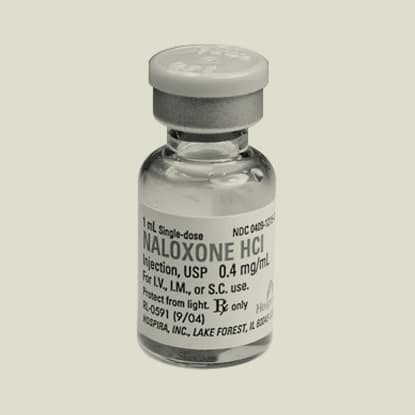
    Naloxone is a safe, highly effective chemical compound that reverses the effects of opiates such as heroin. It has been used in clinical settings as an emergency treatment for opiate overdose for 40 years. Naloxone has been approved for use in Canada for over 40 years and is on the World Health Organization List of Essential Medicines. Naloxone has no potential for abuse – in the absence of narcotics it exhibits essentially no pharmacologic activity. Naloxone will work only for drugs in the opiate/opioid family – it is not effective for overdoses of other drugs such as cocaine.

    This treatment can be administered by a by-standard and is available as a non-prescription in Canada. Please note that Naloxone does not replace professional medical treatment and “Emergency medical assistance (calling 911) should always be requested when an opioid overdose is suspected.” Health Canada recommends calling first then immediately administering Naloxone. Multiple doses may be required to reverse an overdose.

    What is a NARCAN kit and is it different than the nasal spray?

    There are now two common types of Naloxone available in Canada: injectable and nasal spray administrations. NARCAN is the brand that is producing the products available in Canada. They produce both the NARCAN Kits which include the injectable naloxone and syringe, and the nasal spray. Depending on where Naloxone is injected, it begins to work in less than 2 minutes or up to 5 minutes. The fastest way to administer naloxone is by injecting it into a vein. The nasal spray effects start in 2 – 3 minutes. (1)

    Both versions are now available as a non-prescription treatment. The injectable version was approved by Health Canada as non-prescription in March 2016 followed by the nasal spray in October 2016.

    How can Naloxone help reduce the number of drugs deaths?

    Naloxone can play a major role in preventing deaths – especially if it can be administered to someone in overdose as early as possible. To maximize the impact of Naloxone on drug deaths, it is necessary to have Naloxone available at the scene of the overdose before specialist help arrives. This means that Naloxone has to be available to members of the community for emergency use. Note that emergency services should always be requested as soon as an overdose is suspected then the Naloxone should be administered immediately.

    Where Can I Access Naloxone?

    Naloxone is available as a non-prescription across Canada and anyone is available to carry it. Pharmacies carry Naloxone and some provinces and non-profits offer Naloxone to take home for free.

    Training sessions are available through many organizations to learn how to administer Naloxone.

    Find Naloxone in Alberta 

    Find Naloxone in British Columbia 

    Find Naloxone in Saskatchewan 

    Find Naloxone in Manitoba 

    Find Naloxone in Ontario 

    Find Naloxone in Quebec and information here 

    Find Naloxone in the Northwest Territories 

    Find Naloxone in the Yukon 

    There are no Naloxone locators available online for the following provinces, however Naloxone is available at pharmacies across Canada. The following information is available:

    Additional information for Nunavut

    New Brunswick – find a pharmacy 

    and Nova Scotia health centre locations 

    Access to Naloxone varies around the world, including take-home doses for people who use illicit drugs in Europe and Australia, and across Canada. Scotland introduced a National Patient Group Directive in August 2010 to ease the development of take-home Naloxone programs. Naloxone is also available over the counter in Turin, Italy. There are over 180 successful take-home Naloxone programs in the U.S., such as Project Lazarus in North Carolina, which has helped to distribute Naloxone to individuals who are at risk due to prescribed opiates (2).

    For more information – visit Health Canada’s Naloxone page

  • Towards a North American Strategy to End the War on Drugs

    Towards a North American Strategy to End the War on Drugs

    I met Javier Sicilia at the Museum of Anthropology in Mexico City last February while at a conference on drug policy organized by Mexico Unido Contra la Delincuencia, a civil society group working on crime prevention strategies. Gillian Maxwell, a member of our Executive Committee, and I made the trip to share our experiences working on drug policy issues in Vancouver, to improve our understanding of the situation in Mexico and to make connections with Mexican NGOs and business groups. We were also keen to meet with Javier Sicilia who was working with colleagues in Mexico and the US on an ambitious new project.

    Sicilia is a well-known poet, writer and journalist who was thrust into the spotlight when his son was brutally murdered in Cuernavaca after being caught in the crossfire between drug gangs. Upon this tragedy, he became one of the tens of thousands of innocent victims of the war on drugs being waged across this magnificent country. I had heard how Sicilia had stopped writing poetry and taken to the streets, igniting large protests that saw a hundred thousand citizens marching from Cuernavaca to Mexico City, demanding an end to the drug-related violence that has shaken the foundations of Mexican society.

    Javier Sicilia
    Javier Sicilia

    I spotted Sicilia in the foyer of the museum and approached him from behind, calling out his name as he walked towards the museum auditorium. As I had no Spanish and knew he did not speak any English, I wasn’t sure how our meeting would begin should I get his attention. Finally he heard my calling, spun around, reached out and embraced me tightly with both arms and welcomed me into his space. Such a fulsome greeting offered to a complete stranger surprised me but over the next few hours I saw that Sicilia was an intense, committed individual who embraced many.

    Our conversation was limited but we had a good connection and agreed to meet again with his organizers. We wanted to speak with them about the meeting the Canadian Drug Policy Coalition was organizing with American and Mexican groups to work on the idea of a North American coalition. The coalition would work together to highlight the negative impacts our current drug policies are having on Canada, the US and Mexico, with a specific focus on how the criminalization of drug use has created such a pervasive and violent underground market in all three countries.

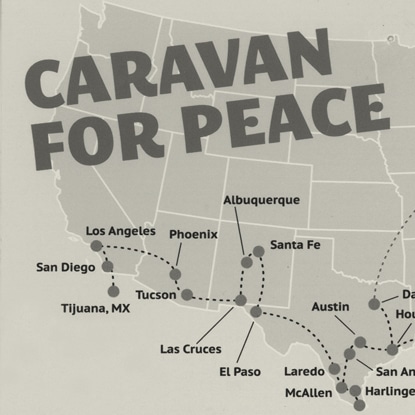
    Sicilia was interested in the concept of a North American strategy to end the violence in Mexico as he was already working to organize a Mexican/US project; the Caravan for Peace with Dignity and Justice. Which was about to traverse the US with a hundred or so victims of Mexico’s drug war.

    The main objective of the Caravan is to bring to the streets and communities of the US the reality that Mexicans are facing – the loss of life, the destruction of communities, the culture of fear that permeates so many localities, and the unrelenting violence that takes place each day.

    In the coming months CDPC will be exploring the connections between Canada, the US and Mexico and how our so-called drug problems are interrelated. We will be supporting the Caravan for Peace with Dignity and Justice through our blog, social media channels, and by travelling to Baltimore, Maryland to participate in a drug policy town hall meeting when the Caravan visits on September 8th and 9th.

    We hope you will begin to think about how Canadians can become involved in supporting efforts to stop the violence in Mexico and look forward to your thoughts and ideas over the coming months.

  • International Overdose Awareness Day: People’s Lives Matter

    International Overdose Awareness Day: People’s Lives Matter

    “We also hear from many parents of drug users who have saved their own sons and daughters. Often when people shoot drugs, it happens near relatives rather than other drug users, who sometime know better than doctors how to provide help. If parents have a Naloxone kit at home and if they have been trained how to use it, they can make an injection and see their child come back to life right in front of their eyes. Often mothers ask us: Why didn’t we know about naloxone before? Why didn’t the drug therapist ever mention that there is a product that can reverse an overdose and save a life immediately?”

    These are the words of Natalia, an outreach worker in the Ukraine as she describes the positive impact of her organization’s overdose prevention program on clients, employees, and the community. Natalia was interviewed by Sharon Stancliff from the Harm Reduction Coalition in New York during a Regional Workshop on HIV and Drug Use in Kiev, Ukraine. This interview is from a series of videos of people talking about the positive experiences with overdose response programs.

    Natalia is not alone. Many people have been saved by proper training about overdose prevention and response. Many more could be saved by expanding these initiatives. That’s what International Overdose Awareness Day is about.

    What is an overdose?

    An overdose means having too much of a drug (or combination of drugs) for your body to be able to cope with. There are a number of signs and symptoms that show someone has overdosed, and these differ with the type of drug used. Check out this website for information on the signs of an overdose.

    Between 2002 and 2009 there were 1654 fatal overdoses attributed to illegal drugs in B.C. Death from drug‐related overdose is a leading cause of accidental death in Ontario. Increases in the use of prescribed medications like Oxycodone have precipitated increases in overdose. Each year in Ontario between 300 and 400 people die from overdose involving prescription opioids — most commonly oxycodone. In Ontario, prescriptions of oxycodone increased by 850% between 1991 and 2007. The addition of long-acting oxycodone to the drug formulary was associated with a 5-fold increase in oxycodone-related mortality and a 41% increase in overall opioid-related mortality.

    What is International Overdose Awareness Day?

    International Overdose Awareness Day is held on August 31st each year. Commemorating those who have met with death or permanent injury as a result of drug overdose, it also acknowledges the grief felt by their families and friends. Celebrated around the world, it aims to raise awareness of overdose and reduce the stigma of drug-related death, especially for those mourning the loss of a loved one. It also spreads the message that the tragedy of overdose death is preventable.

    An Inspired Idea

    International Overdose Awareness Day originated in Melbourne, Australia in 2001. Sally Finn, manager of a Salvation Army needle and syringe program, was touched by the sorrow she observed among the friends and families of those who had overdosed. She witnessed their inability to express that sorrow because of the stigma surrounding people who use drugs.

    Sally decided to organize an event of remembrance. To commemorate those who had died from overdose, Sally thought of distributing ribbons. She thought she’d need 500… she gave out 6,000.

    Eleven years later, that one event in the back yard of a suburban crisis centre has evolved into International Overdose Awareness Day, which is now celebrated around the world. Its global significance reflects the universality of the human emotions triggered by the tragedy of overdose – a tragedy that is preventable.

    Events in Canada marking International Overdose Awareness Day 2012

    Ottawa: This year Ottawa is hosting an event at the Human Rights Monument on Elgin St. (at Laurier St.) in front of City Hall from 11:30am -12:30pm. Speakers will give an update on overdose statistics in Ontario, Dr. Lynne Leonard (Ottawa University) will speak and organizers will demand overdose prevention programming (Naloxone), evidence based treatment facilities, and the establishment of a supervised injection facility in Ottawa. For more information check out this page.

    Toronto: The South Riverdale Community Health Centre is offering an afternoon of events with food and films. To kick things off, they are declaring their facility to be a Good Samaritan Zone and reminding people that they won’t be penalized for drawing attention to an overdose occurring on the site. Events will continue with a talk by Chantal Marshall from The Works in Toronto, who will discuss the role that Naloxone can play in responding to overdose, and Walter Cavalieri from the Canadian Harm Reduction Network, who will speak about the importance of remembrance on International Overdose Awareness Day.

    Edmonton: On August 31st, Streetworks will be hosting a candlelight ceremony at City Hall at 2:00pm. Along with the ceremony, there will be words spoken by the Medical Officer of Health for the Edmonton Zone, Dr. Christopher Sikora, as well as a designate from City Hall. There will also be a raffle, with all proceeds going to overdose awareness programs.

    Victoria: A vigil will be begin at 10:00am on the corner of Quadra and Pandora to honour those lost to fatal drug overdose and to recognize how stigma and discrimination, criminalization and a lack of harm reduction services, including supervised consumption services, continue to result in overdose fatalities. Check here for more information.

  • Caravan for Peace with Dignity and Justice

    Caravan for Peace with Dignity and Justice

    footerBlog60,000 killed, 10,000 disappeared and 160,000 displaced.
    This is the ongoing tragedy that has been wrought upon the Mexican people in the few short years since Felipe Calderón declared a “war on cartels” in December, 2006.

    Javier Sicilia, the famed Mexican poet, stopped writing poetry after his son was gunned down in Cuernavaca in March, 2011. On the day his son died he wrote one final verse before putting down his pen: “the world is not worthy of words, they have been suffocated from the inside, just as they suffocated you.”

    caravan2
    CC photo by Caravan4Peace

    Since then he has been taking to the streets of Mexico, with hundreds of thousands of other citizens in a dramatic plea to the drug cartels and the government to stop the violence that has been tearing apart their country. Sicilia, as he is known in Mexico, led two Caravans for Peace – one from Cuernavaca to Mexico City and the other through the north of Mexico, where the violence has been beyond comprehension.

    On August 12th, Sicilia led close to a hundred victims of the drug war in Mexico across the border from Tijuana to San Diego to begin a month-long Caravan for Peace across the southern and north eastern US. The overarching message of the Caravan for Peace is that the war on drugs continues to devastate his country and is the result of drug policies initiated in the U.S., Canada and Mexico. CDPC will be joining the Caravan for Peace in Baltimore, Maryland on September 9th as it stops to hold a Town Hall Meeting on drug policy that will look at how all three countries have much to gain by considering alternatives to a failed war on drugs.

    Follow our blog in the coming weeks to read more about the Caravan for Peace, Javier Sicilia, and Canada’s relationship to Mexico’s drug war.

  • AIDS 2012 Director’s Summary

    AIDS 2012 Director’s Summary

    The dust has settled on the most recent International AIDS Conference that took place July 22 – 27th in Washington DC. The Canadian Drug Policy Coalition was there on the ground, taking part in the many sessions and events that took place at this bi-annual gathering. Holding the event in DC, ground-zero for the war on drugs, is what made this year’s conference so special and yet so disappointing at the same time.

    Donald MacPherson and Alan Clear at CDPC booth
    Donald MacPherson and Alan Clear at CDPC booth

    In recent years, a strong argument has been made by the world’s leading HIV/AIDS scientists, physicians, and activists that global drug policies, directly responsible for one third of new HIV infections in the world, must be reviewed if efforts to slow or halt the epidemic are to be successful. The emergence of initiatives like the Vienna Declaration , organizations like International Doctors for Healthy Drug Policies, and the International Centre for Science in Drug Policy are testaments to the concern about the harms that global drug policies are causing world-wide.

    What was most disappointing about the conference was the lack of focus on drug policy and its contribution to the global epidemic.

    AIDS Action Now
    AIDS Action Now

    There was little in the official program that acknowledged that the criminalization of drugs and those who use them is a key driver of increased risk of HIV transmission. There was absolutely no mention of this issue in any of the opening ceremonies of the conference. On the other hand, in the Global Village (the community organized venue that takes place parallel to the conference but outside the main event) there were many events, actions, discussions, and panels that highlighted the importance of finding alternative drug policies that worked better to protect public health, reduce stigma and uphold the human rights of people who use drugs.

    Canada’s Federal Minister of Health, Leona Aglukkaq, was given a hostile reception by many of the Canadians in attendance over the federal government’s lack of support for harm reduction, cuts to HIV AIDS organizations and the denial of health care benefits for refugee claimants. The video of this action can be found here http://www.aidsactionnow.org/

    CDPC created a live-blog for AIDS 2012 to follow the issues raised at the conference. Check it out for stories, videos and commentary on the relationship between drug policy and HIV/AIDS.

    Lewis2012
    Watch Now

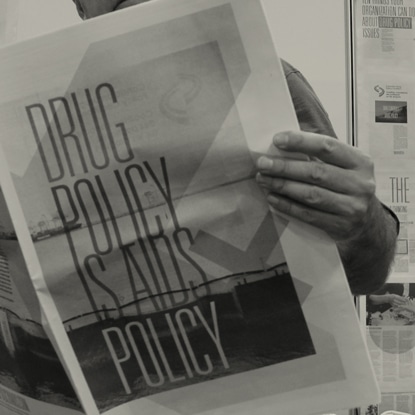
    We also delivered a newspaper that flew off the stands at the CDPC booth in the Global Village. Thanks to the wonderful design team that helped us put it together. It was a real hit!

    Watch Stephen Lewis on drug policy and HIV here on our live blog.

  • Drug policy off-limits at AIDS 2012 Opening

    Drug policy off-limits at AIDS 2012 Opening

    The opening session of AIDS 2012 is the anchor event for many attendees. This is the place where world leaders in the AIDS movement say their piece and inspire attendees to continue their work. Speakers at this year’s session were numerous and notable, including World Bank President Jim Yong Kim, who delivered the message that his organization cares and wants to see more involvement of civil society in shaping global anti-poverty programs (despite years of insisting that countries scale down their social safety nets to receive World Bank financial assistance). The conference co-chairs, Diane Havlir and Elly Katabira, along with the Deputy President of South Africa also urged conference attendees to embrace the goal of eliminating HIV in our generation. All good stuff.

    New Vienna Declaration Ad
    New Vienna Declaration Ad

    The highlight of the evening was Annah Sango from the International Community of Women Living with HIV/AIDS who spoke most poignantly about the need to integrate women’s issues into the international AIDS agenda. She praised the work of NGO’s addressing the needs of people who use drugs and reminded the audience that the way forward cannot proceed without the voices of those most affected, including people who use drugs, women, and sex workers. Speakers made it clear that organizations focused on AIDS in a global context have had major successes at scaling up prevention and treatment. Yet it was apparent that discussion of controversial issues like the decriminalization or even legalization of drugs was a nonstarter. Last night’s speakers briefly mentioned needle exchange but the overall framework of global drug policy was clearly not on the agenda.

    These profound absences were supposed to be remedied by the 2010 Vienna Declaration. But the lack of drug policy discussion last night makes it clear why CDPC’s presence is needed in Washington this week. Our work is to remind attendees that drug policy is AIDS policy and that harm reduction interventions and a discussion of legal frameworks should not only be up for discussion, but are central to the conference’s goal of an AIDS-free generation.

  • Twin Epidemics AIDS 2012 Pre-Conference

    Twin Epidemics AIDS 2012 Pre-Conference

    The CDPC is in Washington D.C., for AIDS 2012 – a sprawling conference and gathering that attracts some 25,000 people from across the world. Yesterday we attended a day-long satellite meeting on the “Twin Epidemics of HIV and Drug Use”. It was an intriguing mix of solo speakers and panel presentations.

    Gil Kerlikowske, U.S. Drug Czar, kicked off the day with a short talk about American drug policy. He talked about the U.S.’s new approach to drugs as a “third way”, though I’m not sure he spelled out the other two ways. Clearly he wanted his audience to appreciate that the U.S. War on Drugs was coming to an end. But the deployment of American law enforcement along the Mexican border, in Honduras and parts of Africa might suggest otherwise.

    Photo via HCLU
    Photo via HCLU

    Kerlikowske took pains to talk about his support for a public health approach to drug use and praised his government’s support for the 2,600 drug courts already in existence in the U.S. However, he did not mention some of the issues inherent to the quasi-coercive methods used by these courts.

    He also made clear his support for needle exchange, though was careful to note that Congress had tied his hands by banning federal funding for syringe distribution in 2011. He ended with a vague call for a “critical convergence” between public health and public safety. His definition of public health was clear from his earlier remarks, but his definition of public safety remained a small mystery, though he is likely referring to a continuation of the criminalization of some drugs.

    Liz Evans from the Portland Hotel Society gave an impassioned presentation of the successes of Vancouver’s supervised injection site, Insite. Panel presentations ran the gamut. There was much discussion about the need to scale-up harm reduction interventions that can reduce HIV transmission. Speakers praised efforts to increase the availability of methadone, needle exchange, treatment, detox, and overdose prevention programs.

    There was talk about the UNAIDS goal to reduce HIV infections by 50% among people who use drugs. Presentations examined the gap between what countries are willing to do and what’s needed. Over and over again, it was clear that civil society organizations with the support of the Global Fund and the Open Society Foundations carry the lion’s share of responsibility for harm reduction services around the world.

    Funding for these groups is often precarious and time-sensitive. Speakers from the Global Fund advised audience members that the Fund is undergoing a review of its proposal processes and its approach to funding harm reduction. Clearly, audience members were worried that this might spell an end to the Fund’s support for harm reduction. We were advised to contact board members at the Fund to press our case for the continuation of harm reduction funding.

    It likely won’t come as much of a surprise that U.S. concerns shaped the agenda for this meeting. Congress’s decision to withdraw funding for needle exchange underscored the stigma that shapes the lives of people who use illegal drugs. With this ban in place, it was difficult for some U.S. attendees to move beyond discussion of needle exchange to programs like supervised injection and heroin assisted treatment. Daniel Wolf from the Open Society Foundations pressed U.S. representatives to help audience members make sense of Congress’s decision and it was clear from their responses that promoting discrimination against people who use drugs is still politically useful in the U.S. There was also a curious sentiment among U.S. attendees: their hope for more meaningful drug reform measures in Obama’s second term (if he wins in November).

    Some of the speakers spoke of their drug use histories and reminded audience members to focus on the whole person in their efforts to stem HIV infections. Representatives from civil society organizations including those in the U.S. talked about the needs of the people they serve and decried the deeply “resource scarce” environments in which they operate.

    Over and over again some speakers spoke of the vulnerable groups who need harm reduction services, including men who have sex with men, people who use drugs and sex workers. So much so, that a speaker from New York’s Harm Reduction Coalition challenged some of these presenters to avoid re-marginalizing people with language that both fails to recognize the diversity within these groups and frames these groups as problems to be solved. As this critic noted, it was clear that politicians and world leaders were clearly the problem when it comes to meeting the needs of people who use drugs.

    All in all, the day ended with a feel good sentiment but not much consensus on how to move forward. Speakers acknowledged that practical solutions exist, but are often politically unpopular. In the coming days, we look forward to deeper discussions at the conference about how to scale-up proven programs like needle exchange and supervised consumption.

  • Drug Courts in Canada: the Good, the Bad and the Badly Researched

    Drug Courts in Canada: the Good, the Bad and the Badly Researched

    Drug treatment courts (DTC’s) are often touted as the solution to a cycle of drug addiction and crime. But are they? That’s the question the Canadian HIV/AIDS Legal Network sought to answer in a 2011 publication that reviews the operations of six federally funded drug courts in Canada (Toronto, Edmonton, Vancouver, Winnipeg, Ottawa and Regina). This study is also a detailed primer on drug courts for the uninitiated. The report does not completely dismiss DTC’s but raises some serious questions about how they operate and their effectiveness.

    Photo: Some rights reserved by s_falkow
    Photo: Some rights reserved by s_falkow

    The notion that addiction is the result of a moral failing sometimes gives way to the idea that it’s a chronic illness that will respond to medical treatment. But as this report points out, drug courts operate on a combination of these assumptions.

    Promoted as a way to reduce drug use and prevent crime, drug courts embrace the idea that treatment can alleviate addiction.

    But they also use quasi-coercive and punishing methods more akin to the criminal justice system. Applicants to a drug court treatment program must plead guilty to a crime and submit to a mandatory urine screening. Failure to adhere to the court ordered treatment program can mean a prison sentence. But if addiction is a chronic relapsing illness as the United Nations Office on Drugs and Crimes suggests it is, how well does it respond to these quasi-coercive  techniques used in drug courts? Not that well according to the authors of this report.

    This report also raises serious questions about the methodology of research on drug courts. Its authors argue that given the lack of follow-up research on the experiences of participants, and the low retention rates in many DTC programs, it’s difficult to conclude at this stage whether or not drug courts result in decreased drug use and/or recidivism. More alarmingly, these authors found that women are less likely to apply to DTC’s and less likely to graduate at comparable levels to men, partly due to a lack of gender specific programming and program flexibility that accommodates parenting responsibilities. Indigenous women and men are also less likely to complete drug court programs due in part to the lack of Indigenous-specific treatment services.

    Screen-shot-2012-07-18-at-7.46.53-AM-230x300
    Download the report

    The report’s authors question how voluntary the entry to treatment is when prison is the alternative and access to other treatments are limited. As stated in the report,

    “given the difficulty of obtaining drug treatment and social services without going through the DTC system, it is questionable whether a person is voluntarily entering DTC.”

    The authors also point out that a DTC system can potentially undermine some of the safeguards of the traditional judicial system. Drug courts may also violate human rights, specifically, the right to health outlined in Article 12 of the International Covenant on Civil and Political Rights because participants can be denied access to a health service if they do not follow the rules of a DTC program.

    Overall, this report questions whether dedicating limited resources to quasi-compulsory drug treatment via the criminal justice system, rather than scaling up access to quality voluntary treatment, is the best way to help people limit their drug use and prevent recidivism.

    For more information see: Impaired Judgment: Assessing the Appropriateness of Drug Treatment Courts as a Response to Drug Use in Canada from the Canadian HIV/AIDS Legal Network. Available at: http://www.aidslaw.ca/publications/publicationsdocEN.php?ref=1302