Category: Supervised Consumption Services

  • AIDS 2012 Director’s Summary

    AIDS 2012 Director’s Summary

    The dust has settled on the most recent International AIDS Conference that took place July 22 – 27th in Washington DC. The Canadian Drug Policy Coalition was there on the ground, taking part in the many sessions and events that took place at this bi-annual gathering. Holding the event in DC, ground-zero for the war on drugs, is what made this year’s conference so special and yet so disappointing at the same time.

    Donald MacPherson and Alan Clear at CDPC booth
    Donald MacPherson and Alan Clear at CDPC booth

    In recent years, a strong argument has been made by the world’s leading HIV/AIDS scientists, physicians, and activists that global drug policies, directly responsible for one third of new HIV infections in the world, must be reviewed if efforts to slow or halt the epidemic are to be successful. The emergence of initiatives like the Vienna Declaration , organizations like International Doctors for Healthy Drug Policies, and the International Centre for Science in Drug Policy are testaments to the concern about the harms that global drug policies are causing world-wide.

    What was most disappointing about the conference was the lack of focus on drug policy and its contribution to the global epidemic.

    AIDS Action Now
    AIDS Action Now

    There was little in the official program that acknowledged that the criminalization of drugs and those who use them is a key driver of increased risk of HIV transmission. There was absolutely no mention of this issue in any of the opening ceremonies of the conference. On the other hand, in the Global Village (the community organized venue that takes place parallel to the conference but outside the main event) there were many events, actions, discussions, and panels that highlighted the importance of finding alternative drug policies that worked better to protect public health, reduce stigma and uphold the human rights of people who use drugs.

    Canada’s Federal Minister of Health, Leona Aglukkaq, was given a hostile reception by many of the Canadians in attendance over the federal government’s lack of support for harm reduction, cuts to HIV AIDS organizations and the denial of health care benefits for refugee claimants. The video of this action can be found here http://www.aidsactionnow.org/

    CDPC created a live-blog for AIDS 2012 to follow the issues raised at the conference. Check it out for stories, videos and commentary on the relationship between drug policy and HIV/AIDS.

    Lewis2012
    Watch Now

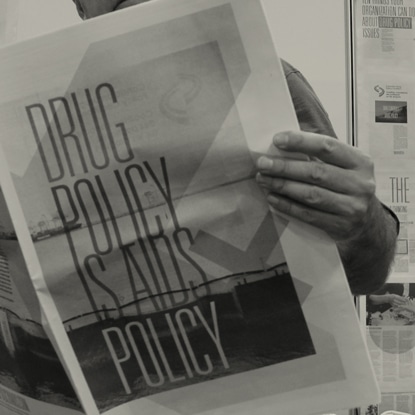
    We also delivered a newspaper that flew off the stands at the CDPC booth in the Global Village. Thanks to the wonderful design team that helped us put it together. It was a real hit!

    Watch Stephen Lewis on drug policy and HIV here on our live blog.

  • Director’s Report

    Director’s Report

    The past three months have been a blur of activity as we further establish our presence and connect with organizations and individuals across the country and around the world. There truly is something bigger going on and momentum is building towards considering new and innovative approaches to addressing drug problems.

    Mexico Unido Contra la Delincuencia
    Mexico Unido Contra la Delincuencia

    In February, I was invited to speak at an international conference in Mexico City – Drogas: Un balance a un siglo de su prohicion, organized by the crime prevention group Mexico Unido Contra la Delincuencia. The forum provided a thorough consideration of possible alternatives to the devastating consequences of the Mexican government’s war on drugs. Speakers came from around the world to share stories of innovation, legislative changes and practices that have moved their drug policies towards a public health approach and away from a failed criminal justice model.

    Integrating Supervised Injection Into Health Services and Community: A National Knowledge Exchange

    CAHR 2012 Montréal
    CAHR 2012 Montréal

    In April, CDPC organized a forum on supervised injection services in partnership with the Dr. Peter Centre in Vancouver and Cactus Montreal as an ancillary event at the Canadian Association of HIV Research meeting in Montreal. The event was held in the beautiful Biblioteque et Archive National du Quebec and was a chance for organizations to share their experiences and review the current state of the discussion in their jurisdictions. CDPC will be working with a number of organizations to keep this national discussion moving forward as different localities explore implementing these services.

    North American Drug Strategy Meeting – San Francisco, April 12, 13

    San Fransisco
    San Fransisco

    As part of CDPC’s international work we co-hosted a meeting in partnership with the Drug Policy Alliance in the US and CUPHID from Mexico City to explore the development of a coordinated North American drug policy dialogue. The San Francisco meeting was the initial exploratory session to see how we can work together to bring forward alternatives to North America’s current drug policies. In an effort to strengthen our ties across the continent, CDPC is currently looking for Canadian allies interested in supporting our work in Mexico.

    Visit to the Maritimes

    People & Policies Conference Halifax
    People & Policies Conference Halifax

    As part of our ongoing efforts to build a national coalition I visited Atlantic Canada in May, attending events and meetings in Halifax, Saint John, New Brunswick and Charlottetown. Atlantic Harm Reduction Research Network invited CDPC to be a part of their public session – People and Policies: How do Drug Policies Impact the Health of our Communities? In addition to this, a day-long session with service providers and researchers also considered how best to integrate harm reduction services into shelter and emergency ward settings.

    In Saint John, NB, AIDS Saint John, the Urban and Community Studies Institute at University of New Brunswick and CDPC co-hosted an event – Drugs and the City, which featured a panel discussion on drug policy with Tim Christie, Ethics Director, Saint John Health Region and Bill Reid, Chief of Saint John Police Department.

    In Charlottetown, I met with a number of parents who are concerned about the lack of youth treatment on the Island and are interested in organizing a provincial “addictions movement” to generate discussion, share experiences and engage the provincial government in dialogue on improving services for people with drug problems.

    Thunder Bay Municipal Drug Strategy

    Pot, Pills and Parties Thunder Bay
    Pot, Pills and Parties Thunder Bay

    On May 24th Canadian Students for Sensible Drug Policy and Thunder Bay Drug Strategy put on the event – Pot, Pills and Parties. The event focused on the impact of Bill C-10 on young people and included a presentation from CDPC – Changing the Frame: A New Approach to Drug Policy in Canada.

    As CDPC reaches out across the country we are finding new and innovative ways to strengthen and build our national coalition to improve Canada’s approach to drug problems. We will continue to engage Canadians and work at the international level towards this end.


    Photo Credits:
    Mexico – Steve Rolles
    Montréal – Caroline Mousseau
    San Fransisco – CC Flickr evoo73
    Halifax – Wooden Shoe Photography

  • New Provincial Guidance for Supervised Injection Services in BC

    New Provincial Guidance for Supervised Injection Services in BC

    Supervised injection sites help save lives and protect communities. This was the conclusion of over 30 research studies on Vancouver’s own supervised injection site known as Insite. And Canada’s Supreme Court agreed in September 2011, ordering the federal Minister of Health to grant a section 56 exemption to the Controlled Drugs and Substance Act to allow Insite to continue to operate.

    To scale up harm reduction and support the development of similar services throughout the province, the BC Ministry of Health has now revised its Guidance Document for Supervised Injection Services. Written for health care professionals, it provides advice to health authorities and other organizations considering supervised injection services in their local areas.

    Kenneth Tupper - B.C. Ministry of Health
    Kenneth Tupper – B.C. Ministry of Health

    At a recent public forum in Victoria, BC, Kenneth Tupper of the B.C. Ministry of Health affirmed the value of supervised injection as part of a “comprehensive program of harm reduction services.”

    “The courts have ruled that supervised injection is a valuable approach to health care,” Tupper said, “and the new Guidance Document affirms the province’s support of these services.”

    The “guidance document” could seem daunting for the uninitiated. It spells out a range of issues that should be covered by any organization considering a supervised injection site. This includes extensive knowledge of the local services, rates of HIV and Hepatitis C and any available estimates of drug use patterns. Interested organizations will also need to provide a detailed description of the proposed service and demonstrate how it will be consistent with the principles of harm reduction as spelled out by the B.C. Ministry of Health documents.

    According to provincial policy, anyone who wants to offer this service will need to consider how they will sustain the support of local groups like medical health officers, police departments and other potentially interested groups. They will also need to plan services to be offered in conjunction with supervised injection even if the proposed supervised injection site is small or mobile and carefully consider how client data will be collected and how issues like the risks of substance use and expectations for conduct at the service are to be communicated and documented.

    ‘Harm reduction’ refers to policies, programs and practices that aim to reduce the negative health, social and economic consequences of using legal and illegal psychoactive drugs, without necessarily reducing drug use. Scaling up harm reduction for individuals, families and communities is core to the work of the CDPC.

    We hope you will join us and help spread the word about the importance of services like supervised injection and help us scale up harm reduction in our communities.


  • Dr. Mark Tyndall – Supervised Injection sites are the lightning rod of harm reduction

    Dr. Mark Tyndall – Supervised Injection sites are the lightning rod of harm reduction

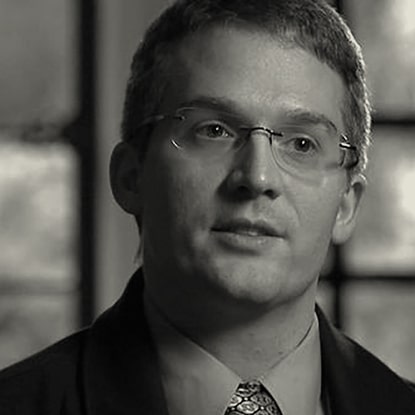
    I sat down with Dr. Mark Tyndall at the 21st Annual Canadian Conference on HIV/AIDS Research(CAHR) in Montreal this April. The theme of the conference was turning points and meeting new challenges. Tyndall is no stranger to confronting challenges and he is known as a national leader in HIV prevention and care. He worked for over a decade in Vancouver at UBC and the BC Centre for Excellence in HIV/AIDS, also as the head of Infectious Diseases at St. Paul’s Hospital. He now calls Ottawa home and serves as the head of Infectious Diseases at the University of Ottawa.

    “supervised injection sites have become a lightning rod of harm reduction, but we all know and recognize that they are a very important way to try and engage people in some kind of continuum of care…and the need is still quite large.”

    Having been at the forefront of Vancouver’s supervised injection site (INSITE), Tyndall knows that supervised sites and harm reduction services need to be scaled up.

    Tyndall says that there is a public health crisis in Ottawa, similar in some cases to what he saw in Vancouver a decade ago. The big question he asks is, do we need to repeat the same research process and make many of the same mistakes, or can we learn from places like Vancouver, Frankfurt, and Sydney and implement harm reduction and supervised injection sites efficiently. Tyndall was a speaker at a press conference we held in Montreal during CAHR looking at injection sites Nationally, and he also contributed to the Toronto Drug Strategy report that we wrote about this spring. Please get connected and leave your comments to let us know what you think needs to happen in your community.

  • Groundbreaking EU study supports use of heroin-assisted treatment

    Groundbreaking EU study supports use of heroin-assisted treatment

    On Friday, the European Monitoring Centre for Drugs and Drug Addiction (EMCDDA ) released a groundbreaking report examining heroin-assisted treatment for chronic heroin users, once thought to be untreatable.

    heroin
    Photo Credit: Jay Black

    The report, New heroin-assisted treatment, provides the first state-of-the-art overview of research, examining the latest evidence and clinical experience on the topic in Europe and internationally. The findings show that for the small minority of entrenched opioid users who repeatedly fail to respond to prescriptions of other substitute drugs such as methadone, supervised use of medicinal heroin can be an effective second-line treatment.

    The study’s findings show that Supervised Injectable Heroin (SIH) treatment can lead to: the ‘substantially improved’ health and well-being of this group; ‘major reductions’ in their continued use of illicit ‘street’ heroin; ‘major disengagement from criminal activities’, such as acquisitive crime to fund their drug use and ‘marked improvements in social functioning’ (e.g. stable housing, higher employment rate).

    From the report:

    ‘New heroin-assisted treatment is an issue that has attracted much attention, controversy and often confusion’, says EMCDDA Director Wolfgang Götz. ‘With Europe at the forefront of investigating and implementing this novel approach, the EMCDDA is proud to present the findings of the major contemporary research studies on the topic and the clinical and policy experiences of countries providing it. Our purpose in doing this is not to advocate, but to inform. We hope that this report will help policymakers and practitioners draw their own conclusions about this type of treatment within their own national context’.

    What do you think about expanding heroin-assisted treatment to communities in Canada?  Do you think it’s time to scale up harm reduction and provide evidence-based treatment options for our most entrenched drug users?  We want to hear from you.


  • Toronto Drug Strategy Consumption Room Feasibility study released

    Toronto Drug Strategy Consumption Room Feasibility study released

    toscastudy
    Dr. Carol Strike and Dr. Ahmed Bayoumi (photo by Yuri Markarov)

    In 2005 when the Toronto Drug Strategy was approved by Toronto City Council one of the main recommendations was to complete a needs assessment and feasibility study on the implications of establishing supervised consumption sites in Toronto.

    The independent research project – expanded to include Ottawa – was carried out over four years by Dr. Ahmed Bayoumi, a physician and research scientist at the Center for Research on Inner City Health at St. Michael’s Hospital, and Dr. Carol Strike, an associate professor in the Dalla Lana School of Public Health at the University of Toronto.

    The study recommends establishing injection sites, three in Toronto, two in Ottawa, that are fixed sites and should be integrated within existing service settings.

    report-236x300
    Download Report

    The study does not call for the establishment of consumption sites for people who smoke drugs but does call for more research on how best to provide supervised consumption through inhalation. Evaluation and the importance of a comprehensive approach to substance use is also noted.

    On September 30, 2011, the Supreme Court of Canada upheld the right of Insite, currently Canada’s only supervised injection site located in Vancouver, to remain open.

    Read the full research report here and let us know what you think.

  • Insite withstands test of international drug control conventions

    Insite withstands test of international drug control conventions

    At the 55th meeting of the Commission on Narcotic Drugs held in Vienna March 12 – 16th Damon Barrett, Human Rights expert at Harm Reduction International spoke candidly in the plenary session regarding the erroneous statements made by the International Narcotics Control Board (INCB) in their recent annual report (2011) concerning Vancouver’s supervised injection site, Insite.

    In paragraph 437 of the report the INCB clearly states: “drug injection and consumption outlets that allow illicit drug possession and use are not in line with the international drug control conventions”.  This is an outright falsehood and the United Nations Drug Control Program’s own legal advice commissioned in 2002 admits as much. It can be read here.

    Insite Press Conference
    Insite Press Conference

    The fact that the INCB still carries on trumpeting this false information ten years after the UN’s legal opinion was sought makes a mockery of the INCB’s integrity and credibility.

    Here is the offending paragraph from the INCB report:

    437. In September 2011, the Supreme Court of Canada handed down its judgement with respect to the applicability of the Controlled Drugs and Substances Act to a supervised drug injection facility in Vancouver. The facility had been allowed to operate due to an exemption to the application of the law for “medical or scientific purposes” that had been granted by a previous Government. The Court ruled against the Government’s decision to refuse to extend the injection facility’s legal exemption, thereby allowing the facility to continue to operate. The Board reiterates that under international law, provisions of national law cannot be invoked to justify non-compliance with the international drug control treaties to which a State has become a party. The Board further reiterates its position that drug injection and consumption outlets that allow illicit drug possession and use are not in line with the international drug control conventions, to which Canada is a party.

    Damon Barrett set the record straight for the INCB with this statement:

    The recent Canadian Supreme Court decision on Vancouver’s safe injection facility is criticized as running contrary to article 27 of the Vienna Convention on the Law of Treaties. This states that national law cannot be used to justify non-compliance with international legal obligations. This is true. But the Canadian Supreme Court Case was decided on the basis of Canada’s Charter of Rights and Freedoms, a constitutional document. As the Board is aware, article 3(2) of the 1988 Convention relating to the requirement to criminalize possession for personal use is subject to States parties’ constitutional principles. Similar wording is used in relation to the penal provisions of the 1961 Single Convention. In addition, in 2002, the UNDCP legal affairs team stated in an opinion on the matter that such interventions do not breach the conventions.

    INCB-legal-brief

    Vienna International Centre
    Vienna International Centre

    As such, there is no conflict between the Canadian Supreme Court ruling and the drug conventions. These provisions of the treaties, however, and the UNDCP opinion are not referred to in the Board’s analysis of the case. We would welcome clarification of the Board’s view of the Canadian Supreme Court decision in the light of these terms of the drug conventions and its view of the 2002 UNDCP opinion.

    To Canada’s credit the Canadian delegation also spoke up and let the plenary know that Canada was indeed in full compliance with all of the international treaties pertaining to drug control. Now that this mater is settled in the international arena, we look forward to our Justice Minister Nicholson reaffirming these facts for the Canadian public.


  • NAOMI Research Survivors: Experiences and Recommendations

    NAOMI Research Survivors: Experiences and Recommendations

    On March 31st, 2012 the NAOMI Patients Association (NPA) will celebrate the completion of their first research report, NAOMI Research Survivors: Experiences and Recommendations. To mark the occasion, they are having an open house on Saturday, March 31st at noon at the Vancouver Area Network of Drug Users (VANDU), 380 East Hastings Street, in the Downtown Eastside (DTES) of Vancouver, BC where they will be sharing their report and celebrating their achievement. All are welcome and snacks and copies of the report will be available.

    The Background

    Dave Murray
    Dave Murray

    In January 2011, Dave Murray organized a group of former participants from the North American Opiate Medication Initiative (NAOMI) heroin-assisted treatment clinical trial in the Downtown Eastside of Vancouver, now known as the NAOMI Patients Association (NPA).

    The NPA is an independent group that meets every Saturday at the Vancouver Area Network of Drug Users (VANDU) offices. The NPA has reached out to all former NAOMI participants in the heroin stream of the clinical trial and offers support, education, and advocacy to its members. Although attendance at weekly meetings varies, the highest attendance at a meeting was 44 members. On average, 15 members gather each week.

    The NPA is also associated with the British Columbia Association of People On Methadone (BCAPOM).

    Mission of the NPA

    The mission of the NPA is stated as:
    We are a unique group of former NAOMI research participants dedicated to:

    • Support for each other;
    • Advocacy;
    • Educating peers and the public;
    • Personal and political empowerment;
    • Advising future studies (heroin and other drugs) and permanent programs;
    • Improvements in consent and ethics;
    • The right to a stable life and to improvement in quality of life.

    The NPA’s goal is to see alternative and permanent public treatments and programs implemented in Canada, including heroin assistance programs.

    The Research

    In March of 2011 the NPA decided to undertake their own research project focused on their experiences as NAOMI research participants. They met with me, Susan Boyd, a drug policy researcher and activist, and decided to work together to conduct focus groups, brainstorming sessions, and writing workshops with NPA members. The NPA adopted the words below to further guide their own research project. They are written by long-time DTES activist Sandy Cameron who passed away last year, from his poem, Telling Stories.

    Telling Stories
    We need to tell our own stories.
    If we don’t tell our stories,
    people with power
    will tell our stories for us.
    It is from this place that the NPA began their own research, to tell their own story in their own words.

    NPA Research Findings

    Five primary themes emerged from the research:

    • Beneficial outcomes of being a participant in NAOMI,
    • Problematic outcomes of being a participant in NAOMI,
    • Ethics and Consent,
    • Creative writing/Everyday life, and
    • Recommendations for other research projects and programs.

    The NPA’s report, NAOMI Research Survivors: Experiences and Recommendations, expands on these themes and much more. The full report is available here.


  • Bill C-10: The work has just begun

    Bill C-10: The work has just begun

    Last Thursday at midnight, the Senate approved the Conservative Omnibus Bill C-10, The Safe Streets and Communities Act, with only minor amendments. This marked a very sad day for Canadians, and for our sense of justice and fairness for all people.

    Bill C-10 was never really intended to be a piece of legislation that represented a direction that was well thought out or designed to build on what is arguably one of the better criminal justice systems in the world. No, instead Bill C-10 was designed as a regressive, punitive, highly political, and ill conceived amalgamation of crime legislation that will set the country back in ways that we will only come to discover over the next decade or two. We assume the legislation will be passed by the House of Commons in the coming days. That will be another sad day.

    But, in the midst of all of the madness, there have been some remarkable activities over the past few months, as organizations and individuals placed Bill C-10 under a microscope.

    For one, a coalition of Canadians has evolved to occupy the discussion and speak out against this legislation. What we have learned from these people over the past month during the Senate hearings into C-10 has been profound. Canadians are deeply concerned about this legislation and how it will impact our youth, Aboriginal peoples, those with mental health and addictions and other vulnerable populations.

    National Chief Shawn A-in-chut Atleo of the Assembly of First Nations and the Assembly of Manitoba Chiefs eloquently articulated their knowledge that Bill C-10 will accelerate the over-incarceration of Aboriginal Peoples. Politicians, researchers, service providers, criminal justice veterans and ordinary Canadians have all come out in increasing numbers to voice their concern that Canada is taking the wrong path with this legislation.

    And we have also learned that the world is watching in disbelief as our government takes us down this path. Veterans of the drug war from Law Enforcement Against Prohibition , some who actually drafted the legislation that brought mandatory minimum sentencing to the U.S. like Eric Sterling from the Criminal Justice Policy Foundation in Washington DC, have spoken out loudly to warn Canadians not to go down the road that Americans took some 30 years ago with this form of legislation for drug offences.The Global Commission on Drug Policy also added their voice sending a letter directly to the Senate asking them to reconsider the direction Bill C-10 would take drug policy in Canada.

    The community that is forming around issues of justice, drug policy, fairness and a concern that we develop effective, evidence-based responses to problems related to drugs in Canada is growing at an amazing rate.

    We want to keep this momentum going, for all of us.

    The work of the Smart Justice Network,

    John Howard and Elizabeth Fry Societies of Canada, Canadian HIV/AIDS Legal Network, Canadian Harm Reduction Network, the TRIP! Project, the Canadian Civil Liberties Association , and so many others needs to continue. Together we can build a vision, and an evidence-based drug policy for the future.

    We have been working with our partners, Leadnow.ca and others to accelerate this process. How can we keep this movement going, building strength and capacity? We’d love to hear your thoughts.

    Bill C-10 has caused thousands of Canadians to pause and think about the choice the federal government has made to use the criminal law to address what are really complex health, social and economic issues in Canada. The Safe Streets and Communities Act will not help us build healthy, vibrant and inclusive communities. But we know together, we can.

    Won’t you join us in this work? We want to hear from you.