Category: All

  • Our 2013 Top Ten Drug Policy Moments Countdown

    Our 2013 Top Ten Drug Policy Moments Countdown

    What a year it’s been. Litigation, legal regulation, anniversaries, confessions, people in high places talking about their drug use and political leadership drew the headlines. We launched our cornerstone report; Getting to tomorrow. And overall things are beginning to change in the global drug policy arena. One can clearly see the cracks appearing in the old international regime that has stifled the discussion of alternatives to the war on drugs for over 40 years. Now countries are beginning to look for approaches that are less punitive for people who use drugs and more targeted on the violent actors in our communities. A better drug policy is possible and we are building it, but we need your help.

    donate1Please consider making a donation to support the activities of the Canadian Drug Policy Coalition. A generous donor has agreed to match your donations, but only until December 31. So take action now and click here to donate.

    Wishing you season’s greetings and a happy new year.


    Here we go! Our Top Ten Drug Policy Moments in 2013

    10. The Organization of American States (OAS) ignites hemispheric dialogue on alternative approaches to the drug problem in the Americas.

    banner

    [The Americas]-In may the OAS launched two reports on the Drug Problem in the Americas. Inspired by the vigorous discussion on drug policy at the Summit of the Americas in 2012 these reports lay out the extent of the drug problem in the hemisphere. The reports also provided a set of scenarios for the next 15 years envisioning ways to reduce violence related to the drug trade and harm from substance use. We were involved in creating the scenarios along with 46 other drug policy representatives from across the hemisphere. We commend the leadership shown by the OAS in pushing for a dialogue on alternatives. They have formalized a discussion that was already taking place. At the international level it’s a big question that they have dared to ask: Is there a better way to reduce the harms from the business of illegal drugs in the hemisphere and better protect those people who use drugs from disease, dependence and overdose death?

    9. Canada implements mandatory minimum sentences for drugs just as US Attorney General calls the practice and policy “broken”

    prison

    [North America]- In a speech to the American Bar Association last August,US Attorney General Eric Holder called mandatory minimums “draconian” and asked Congress to reform a system which can “breed disrespect” for itself. “When applied indiscriminately, they do not serve public safety. They –- and some of the enforcement priorities we have set –- have had a destabilizing effect on particular communities, largely poor and of color. And, applied inappropriately, they are ultimately counterproductive” Kudos to Holder and his staff for taking the leadership to stop this nonsense. Meanwhile here in Canada…

    8. Insite celebrates 10 years, 2 million injections, and no deaths

    insite

    [Canada] – In September Insite, Canada’s first sanctioned supervised injection site celebrated 10 years of serving the Downtown Eastside community in Vancouver. 10 years, 2 million visits and zero deaths. Need we say more? Kudos to PHS Community Services Society, Vancouver Coastal Health, City of Vancouver, Government of BC, the Vancouver Area Network of Drug Users (VANDU) and the people of British Columbia for supporting this life saving innovation in health care. We ask: Where are the other sites across Canada?

    7. Federal government continues to try and thwart life-saving harm reduction programs

    parliment

    [Canada] – For reasons that defy us, it is clear that the federal government is doing it’s best to thwart the expansion of life saving services. Bill C -65, (later renamed C-2) the so called Respect for Communities Act sets out 26 additional requirements that must be met before the Federal Minister of Health will entertain a decision on approval of Canada’s next supervised injection site. Bill C-2 is another measure intended to stall the expansion of life saving programs that have been shown to improve the lives of people who use drugs. With a mountain of peer reviewed papers demonstrating the positive impacts of injection sites and a unanimous Supreme Court of Canada decision supporting Insite one has to wonder what the real agenda is. We will continue to call for action in Canada to scale up these services.

    6. Canadian NGO sues federal government over lack of needle exchange in prisons

    syringe

    [Canada] – On September 25th, 2012, former federal prisoner Steve Simons, the Canadian HIV/AIDS Legal Network, Prisoners with HIV/AIDS Support Action Network, the Canadian Aboriginal AIDS Network and Canadian AIDS Information Exchange filed a lawsuit in Ontario’s Superior Court of Justice, which claims the federal government is violating prisoners’ rights under the Canadian Charter of Rights and Freedoms by failing to provide access to sterile injection equipment in prison. This has led to rates of HIV and HCV that are, respectively, 15 and 39 times higher in prison than they are in the community. For more information about the case, see www.prisonhealthnow.ca and this event post for an upcoming public panel on this issue.

    5. Washington State and Colorado introduce regulatory schemes for the production and sale of cannabis to adults.

    canabbis

    [United States] – In October the Washington State Liquor Control Board adopted rules for the implementation of a legal regulated market in cannabis for adults. These rules serve as the basis for Washington’s newly created adult use marijuana market and are the result of 10 months of research and public input. Voters of the state voted to legalize cannabis in November of 2012. Colorado is also implementing its regulatory system as we write this. 

    4. Providence Health Care and PIVOT Legal Society sue federal government over special access to diacetylmorphine

    salome

    [Canada] –  Developing policy through the courts is not advised but there comes a time when it is the only way to get things done. On November 13th Providence Health Care, PIVOT Legal Society and five patients in the SALOME clinical trial launched a constitutional challenge in the wake of the federal government’s decision to prohibit the prescription of diacetylmorphine (heroin) to people with chronic addictions. Providence Health Care President and CEO Dianne Doyle announced the legal action with the aim of reversing a decision taken by federal Health Minister Rona Ambrose that prevents doctors from giving prescription heroin to patients with severe heroin addiction as part of a treatment regime. “Diacetylmorphine treatment, or heroin-assisted treatment, is a proven treatment option,” said Doyle. Why isn’t Canada scaling up drug treatment priorities?

    3. Uruguay makes history by becoming the first country in the world to legalize the production, sale and use of cannabis by adults.

    [Uruguay] -There is no contest for the award for political leadership in drug policy in 2013. Hands down it goes to President José Mujica of Uruguay who persisted in the face of significant opposition to deliver groundbreaking legislation that creates the first legal regulated market for cannabis at a country level in the world, a market that will be under state control. On December 10th the Uruguayan Senate voted to adopt a bill that will begin the implementation of the cannabis regulatory system. Asked why Mujica was so clear about moving in this direction he said: “The traditional approach hasn’t worked. Someone has to be the first to try this.”

    2. Sensible BC proposes innovative amendment to the BC Policing Act to lighten up enforcement on mere possession of small amounts of cannabis.

    sensible

    [Canada] – Congratulations to the folks at Sensible BC for putting together a creative and innovative campaign to reduce the harm of the criminalization of cannabis possession this year. You came up short but you certainly made your point and set the stage for the next stage towards the inevitable change in cannabis policy in Canada. December 9th 2013 marked the final day of the 90 day Sensible BC campaign as they turned in 200,000 signatures from BC voters who supported new legislation to move towards the decriminalization and then regulation. The legislation, called the Sensible Policing Act is an amendment to the BC Police Act, which redirects all police in the province from using any police resources, including member time, on investigations, searches, seizures, citations, arrests or detentions related solely to simple possession of cannabis. In essence, if implemented it would have decriminalized the possession of cannabis in BC without actually changing the federal law. By the end of the campaign over 4500 volunteers were seeking signatures across the province. Thanks to all of them for working towards a better drug policy for BC and Canada.

    1. Canadians take the gloves off when talking about substance use

    [Canada] – Seems like all year! We think the number one drug policy moment in Canada this year is: Canadians talking about drug use! Thanks to politicians like Liberal leader Justin Trudeau and Toronto Mayor Rob Ford, Canada got into high gear this year. Justin admitted smoking pot recently even while a sitting MP. Rob Ford – well we really don’t want to go in the details but he admitted smoking pot, “lots of it” as well as using crack cocaine. Canadians piled on. They blamed, they shamed, attacked and showed compassion, argued, vilified, reflected on their own drug problems, lined up addictions experts on talk shows and generally demonstrated the full range of responses that many people who use drugs experience every day – the good the bad and the ugly.

    It’s an important moment for Canada. We know we have a drug policy problem and it shows. This January, before all the New Year resolutions have faded, join us as we, along with our partners across the country, ramp up a discussion on the future of drugs and drug policy. Keep an eye out, as there will be many opportunities to get involved.


    donate1The Canadian Drug Policy Coalition relies on donations from people like you to operate. Our small team ensures even the smallest contributions go a long way to make your voice heard. Please donate today.

    footer

  • World Aids Day 2013: If our goal is zero, drug policy reform is crucial

    World Aids Day 2013: If our goal is zero, drug policy reform is crucial

    Zero New HIV Infections. Zero Discrimination and Zero AIDS-related deaths. That is the goal set by UNAIDS over the next two years. But when it comes to stopping HIV transmission associated injection drug use, we have a long way to go.

    “An effective AIDS response among people who inject drugs is undermined by punitive policy frameworks and law enforcement practices” (UNAIDS 2013)

    The 2013 UNAIDS Global report notes that HIV prevalence among people who inject drugs ranged from 5% in Eastern Europe to 28% in Asia.  Rates of HIV among drug injectors in Canadian cities range from approximately 5% to more than 30%. According to Canada’s own Public Health Agency, more than 50% of new HIV infections among Aboriginal people in Canada were caused by intravenous drug use. Rates of HIV and hepatitis C among people incarcerated behind the walls of Canada’s prisons are 10 to 30 times outside those same walls. Although Corrections Canada claims that injection drug use is strictly prohibited within its facilities, no prison system in the world is able to keep drug use out.  But only two of 32 reporting countries surveyed by UNAIDS provided adequate access to sterile syringes for persons who injects drugs in prison.

    In 2012 the Global Commission on Drug Policy released a groundbreaking report titled “The War on Drugs and HIV/AIDS: How the Criminalization of Drugs Fuels THE Global Pandemic.” The report points to the inability of law enforcement to reduce global drug supply and raises the alarm about the role that repressive drug control policies play in driving the HIV epidemic in many regions of the world. The report also details how policies that prohibit needle distribution result in increased syringe sharing.  In fact the Global Commission confirms what others have been saying: the fear of arrest drives people underground and away from needed services. Together these repressive policies help to escalate HIV infections. The Commission urges countries to make available proven drug treatment and harm reduction services, to reduce HIV infection and protect community health and safety.

    It’s clear that ending prohibition and scaling up harm reduction is an integral part of solving the complex global HIV problem. By drawing on the evidence of what works, British Columbia has made significant strides at reducing infection rates, but our federal government willingly refuses to acknowledge the role that harm reduction plays in protecting everyone’s health.

    On September 30, 2013, the second anniversary of the Supreme Court of Canada decision that instructed the Canadian government to issue a permit for the supervised injection site, Insite in Vancouver, we worked with the Canadian HIV/AIDS Legal Network and PIVOT Legal Society to register our concerns to Health Minister Ambrose about attempts by the federal government to block the implementation of life-saving health services for people with addictions, in the face of extensive scientific evidence of their benefits in protecting public health and public safety. Our letter  to Ambrose, which garnered the support of more than 50 organizations in Canada, challenged her government to get going on life-saving harm reduction services. We are still waiting for a response.

    Along with our commitment to World Aids Day, we will also continue to mark September 30 (9-30), the anniversary of the Supreme Court decision supporting Insite. We invite you to join us and help ensure that supervised consumption services become a part of the continuum of care for people who use drugs in Canada. And finally, please consider contributing to help our small but mighty team continue to work for evidence based and human rights focused drug policy reform in Canada.

  • Cannabis regulation is by no means a simple matter, but it can be done

    Cannabis regulation is by no means a simple matter, but it can be done

    At the Canadian Drug Policy Coalition (CDPC) one of things we’ve noticed is that any blog we publish on cannabis regulation attracts more attention than any other topic. This is because there’s widespread interest in any discussion of changes to the laws that govern cannabis. Unfortunately when it comes to the nuts and bolts of cannabis regulation – in other words – the how of regulation, interest tends to drop off. This is because regulation is actually rather tedious. This claim is borne out by the length of the proposed regulations for legal recreational cannabis markets in the U.S. states of Washington and Colorado. That’s why I’m going to make a special plea to you our dear readers to stay with me as I say a few words about what regulation might actually entail.

    ucurveI think it’s fair to suggest that the CDPC favours a model of regulation that draws on the best evidence from public health regulation of alcohol and tobacco. But when it comes to cannabis regulation the devil really is in the details.

    There’s no magic bullet that will make all the current problems with cannabis prohibition disappear. But thanks to the Health Officer’s Council of BC, some of the heavy lifting when it comes to creating models for drug regulation has been done. If you’re curious, check out their 2011 report. As you can see from the diagram drawn from their 2011 report, regulations for cannabis should not be so loose that they create a free and unregulated market for cannabis; nor should regulations be so overly restrictive that we end up reproducing the negative aspects of the current underground economy (control by organized crime, etc.).

    At the same time we need to be clear about the goals we hope to achieve with a legal regulated market for cannabis. Ideally our regulations will help protect and improve public health, reduce drug related crime, protect the young and vulnerable, protect human rights and provide good value for money. So what are some of the things we’ll need to consider? How about we start with the basics.

    Presumably legalization would entail the removal of cannabis from Schedule 2 of the federal Controlled Drugs and Substances Act, followed by its inclusion in the Food and Drug Act. It seems like the next logical thing to do would be to then turn over the regulation of cannabis to the provinces, in the same way that alcohol is currently regulated. We would want to ensure that there is at least some consistency across the provinces so that means somebody at the federal level will have to oversee the regulations as they emerge. That’s the easy part because legalization would ALSO entail consideration of at least the following issues: production, product, packaging, vendor and outlet controls, marketing controls, creation of a system of regulators and inspectors as well as on-going research and monitoring.

    For this blog post, I want to focus on production and product controls. Future blogs may consider the other items on the already long list noted above. My comments are phrased as questions to stimulate discussion of regulation rather than to propose firm rules for how a legal recreational cannabis market might operate.

    IMG_2567In Canada, marijuana is currently produced in one of two ways – under existing legal medical marijuana guidelines or in illegal circumstances. Growing marijuana takes places in a vast array of situations ranging from a few plants grown for personal use all the way to large-scale industrial size operations with 100’s of plants.

    Thus regulating the growth of marijuana for a legal recreational market will not be simple. Many people are very attached to their small-scale gardens and it would be difficult to impossible (as well as undesirable) to eliminate growing marijuana for personal use. At the same time it’s important not to turn the whole thing over to heavily capitalized large scale commercial producers whose main motivation is profit, especially since the range of available strains of marijuana has been the result of innovation by many small-scale growers. Thus, we need to ensure that the best practices in indoor, outdoor, personal, commercial production are preserved while ensuring that cannabis is produced in safe and clean facilities. We will also need to decide who is the appropriate authority for regulating growing operations: municipalities or provinces or some combination of both. Neither seem overly keen on this role so they will require some convincing.

    Okay, if your head doesn’t hurt yet lets turn our attention to product controls. Product controls include issues like price, age limits, potency, permissible preparations (edibles, tinctures, etc.), quality control, and labeling and packaging requirements. Price is a key issue when it comes to meeting public health goals. Price can help shape sales and thus use of cannabis, so we want to ensure that pricing reflects what we’ve learned from alcohol – namely that alcohol consumption is sensitive to price and that price must in some way be related to potency. Related to price is taxation – at what point in the chain from seed to sale will cannabis be taxed and at what rate? And what preparations will cannabis regulations allow; plant materials, tinctures and oils, edibles? Right now Canada’s medical marijuana access program only allows for the distribution of plant material. Clearly this is a very limited approach given that the medical cannabis dispensaries have created a range of edible and other products that eliminate the necessity of smoking cannabis. We will also need to decide where we stand on potency: in other words will we put limits on how potent products can be, and given that there are over 100 cannabinoids, how will we decide which ones we want to measure and regulate.

    Okay so I haven’t covered other essential issues like vendor controls, marketing and evaluation and monitoring but I think you get the picture. Regulation is by no means a simple matter, but it can be done. In fact, experience from legal recreational markets in Washington and Colorado will provide valuable insights that can inform Canada’s approach. And regulation has the potential to create conditions where cannabis production and use is a whole lot safer than the current approach – prohibition.


  • Did You Know that Marijuana is Illegal in Canada?

    Did You Know that Marijuana is Illegal in Canada?

    The idea that marijuana is legal in this country is one of the persistent myths about this substance. In fact, marijuana is still illegal and is listed in Schedule 2 of the federal Controlled Drugs and Substances Act. This means that unless you have authorization to use medical marijuana, you cannot possess, sell or produce marijuana without risking a criminal penalty.  In fact, under 2012 revisions to the law, you could receive a mandatory minimum prison sentence for growing just six plants if any of a number of “aggravating factors” are present (such as being near a school or having children at the same place as the plants).

    Another persistent myth is that police don’t bother to enforce cannabis laws especially possession. It’s true that some police forces have de-prioritized enforcement of possession, but certainly not all.

    According to Statistics Canada, in 2012, there were 57,429 police reported incidents of cannabis possession. This number represents police resources that could be better spent elsewhere and this number also represents a ridiculous incursion on the civil liberties of far too many Canadians.

    Prohibition of cannabis seems even more regressive when we consider that legal recreational marijuana will soon be available in the U.S. states of Colorado and Washington. In the aftermath of successful 2012 ballot initiative campaigns, both states have released draft regulations to govern the production and sale of recreational cannabis. Changes in these U.S. states were a hot topic at the recent International Drug Policy Reform conference in Denver where speakers from Colorado and Washington outlined the rules for “tightly controlled” markets for recreational cannabis.

    Both models of regulation draw on experience with regulating alcohol, although regulations for recreational cannabis will be far more stringent. Both states require numerous controls including age limits, packaging information, and closely controlled documenting of wholesale and retail sales of cannabis to recreational users. Some of the proceeds of taxation will be directed to public health and educational goals.

    In Colorado the legalization of cannabis builds on a successful model of medical cannabis developed in that state over a number of years. In fact, during the three-day conference I had an opportunity to visit two medical cannabis dispensaries and an industrial size cannabis garden. Good Medicine and River Rock Medical Cannabis are just two of the companies in Denver that offer patients an array of medical cannabis products ranging from raw plant materials, to oils, and edibles in a myriad of forms. Lessons learned from these operations will be transferred to recreational cannabis when it becomes available for sale on January 1, 2014.

    What’s remarkable about the changes taking place in these two states is that they employ full legal regulation, not the models of decriminalization already in operation in other parts of the world. Decriminalization involves reducing or eliminating penalties for possession while still keeping production and sales illegal. Though an important step in the right direction, decriminalization still leaves cannabis in an unregulated market of producers and sellers.

    It was clear from visiting the two medical cannabis dispensaries that legalization makes this substance available in a variety of well-labeled forms and gives consumers the option to choose organic products. Security cameras that feed back to state regulators in real-time, monitor the dispensaries and the gardens. The people working in these operations are clearly knowledgeable and professional in the care they take with their products and their customers. Not only does this model work for consumers, but it also provides badly needed jobs.

    The scientific evidence suggests that cannabis has a smaller public health impact than alcohol. It seems that the real crime is staying a course that actually makes us less safe and less healthy because right now, marijuana is only available in Canada in an unregulated market. So what’s holding us back in this country? Maybe it’s that drugs are still politically expedient and some politicians don’t seem to have any qualms about using fears about drugs to get votes. At the Canadian Drug Policy Coalition we think it’s time for change and it’s time to challenge regressive and uninformed policies on cannabis. What do you think?


  • Lifesaving Heroin Assisted Treatment Dealt Serious Blow

    Lifesaving Heroin Assisted Treatment Dealt Serious Blow

    By Connie Carter and Susan Boyd

    On October 3, 2013, federal Health Minister Rona Ambrose announced new regulations that became effective immediately to prevent Health Canada’s Special Access Programme from approving the use of prescribed diacetylmorphine* as a treatment for addiction for a small number of patients finishing the clinical trial SALOME, in Vancouver, BC. Health Canada’s Special Access Programme (SAP) allows practitioners to request access to drugs that are unavailable for sale in Canada.

    Ambrose’s comments at the October 3rd press conference misrepresented the extensive evidence supporting heroin-assisted treatment (HAT). She claimed HAT is unsafe and expensive and not in keeping with her government’s National Anti-Drug Strategy.  Her comments reflected the Harper government’s refusal to acknowledge the eight peer-reviewed research HAT trials worldwide that have found it to be a beneficial, safe, and cost-effective approach for patients where methadone and other conventional treatments have not worked.

    Ambrose promoted the virtues of abstinence-based drug treatment failing to mention that Canada’s system of treatment programs is a patchwork of private and public providers. As the CDPC’s report on Canadian drug policy found, private treatment programs are expensive, and in the absence of national accreditation standards, these programs can vary in quality. Abstinence based treatment is also ineffective for many people with long-wait times for publicly-funded services.

    Ambrose’s press conference included supporters who were called upon to back the federal government’s position. One speaker, Marshall Smith, a former political staffer with the BC Liberal Government, described his own struggles with drugs including crystal meth, and his recovery through abstinence-based treatment. Smith currently works for Cedars at Cobble Hill, a privately run drug treatment facility on Vancouver Island. Smith comes from a self-admitted well-to-do family, who can afford private treatment facilities that can cost upwards of $10,000 a month. Every person’s story of recovery and change is important, but with all due respect to Mr. Smith, it’s vital that no one person’s story stand in for the range of experiences with substance use.

    Comments at the press conference reflected a narrow view of recovery from substance dependency and assumed that all people will benefit from conventional drug treatment approaches. In a turn about from previous calls for abstinence-only drug treatment, speakers’ called for expanded opiate-substitution programs like methadone. But HAT is only offered to patients who have failed repeatedly with methadone and abstinence-based programs.

    Ambrose called Health Canada’s recent decision to approve the use of diacetylmorphine for 20 patients a “loophole” in the Special Access Program regulations. But the Special Access Program is supposed to provide patients with serious or life-threatening conditions, access to drugs on a compassionate or emergency basis and especially when conventional therapies have failed. Under these conditions, many of the seriously ill patients who enter HAT would certainly qualify for access.

    No one knows better the concerns of patients in these research trials than SNAP, an independent Vancouver based group comprised of former and current members of Vancouver based HAT research trials (former NPA). SNAP advocates for human rights and access to appropriate health care for its members and has been working since January 2011 to establish permanent HAT programs. SNAP members also have first hand experience with the use of diacetylmorphine. Their experiences confirm the findings of other research studies that this drug is a proven safe and effective treatment for opiate dependency. Patients’ physical and psychological health improved, accompanied by decreased criminal activity and illegal drug use. Given the positive results from studies around the world and here in Canada, the federal government’s refusal to recognize the best treatment for this small groups of patients is an egregious violation of their rights to access to health care.

    * Diacetylmorphine is the active ingredient in heroin. It is pharmaceutical-grade product manufactured by a company outside Canada. For the purposes of research trials, it is purchased and imported with permission of the Government of Canada.


  • Voices of the Drug War: Mexico and Canada

    Voices of the Drug War: Mexico and Canada

    In Mexico the drug war has had a devastating impact on communities, families, the social fabric and the economy. Deepen your understanding of the complex roots of this tragedy and hear ideas for new and better ways forward.

    Join the Canadian Drug Policy Coalition, Global Exchange and the Movement for Peace with Justice and Dignity for an evening with Javier Sicilia and Teresa Carmona.  Both of these outstanding Mexicans have lost children in the drug-war-driven violence of recent years. Both have chosen to forge their tragedies into opportunities to become agents of the changes so urgently needed in Mexico as well as in North America.
    Mr. Sicilia and Ms Carmona will share their experiences as both victims of the drug war and founders of an important peace movement. They will lead a discussion on why they are committing the moral weight of Mexico’s Movement for Peace with Justice and Dignity to the call for drug policy reform throughout our hemisphere.

    In Canada the drug war has had devastating impacts on individuals, families and communities across the country. Canada’s current drug laws support a lucrative underground and violent drug trade, fuel the spread of HIV and Hepatitis C, disproportionally target marginalized populations, and ensure the availability of illegal drugs to young people in our communities. Bud Osborn poet and Downtown Eastside activist will read and talk about his own journey through the drug war in North America.

    Donald MacPherson, Director, Canadian Drug Policy Coalition will moderate the discussion and highlight the opportunities coming towards us to accelerate the movement for ending the war on drugs.

    You are invited to attend – Voices of the Drug War: Mexico and Canada

    Register here: drugpolicy.ca/javier-sicilia/

    Monday, October 28, 7-9 PM
    World Arts Room
    SFU Woodward’s
    149 West Hastings Street
    Vancouver, BC

    For more info: mail@drugpolicy.ca


    donate1The Canadian Drug Policy Coalition relies on donations from people like you to operate. Our small team ensures even the smallest contributions go a long way to make your voice heard. Please donate today.

     

  • Illegal Drugs Get Cheaper, More Potent

    Illegal Drugs Get Cheaper, More Potent

    Sometimes my work as a drug policy analyst is really hard to explain to my non-drug policy friends. Most of the research findings about drug policy that I deal with on a daily basis fly in the face of conventional wisdom about drugs, drug users and drug laws. One of these pieces of conventional wisdom taught routinely to Canadian high school students is that drug law enforcement is necessary to keep the supply of illegal drug under control, and to discourage young people especially, from using these drugs.

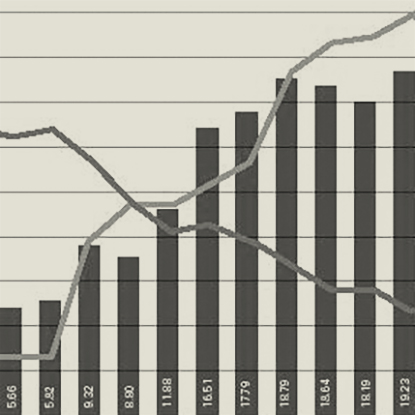
    Change in estimated heroin price and purity in the context of the annual drug control budget in the United States. Source: Global Commission on Drug Policy
    Change in estimated heroin price and purity in the context of the annual drug control budget in the United States. Source: Global Commission on Drug Policy

    As any of you in the field of drug policy reform know, despite the claims by police, drugs are now more available, higher purity and more potent than they were 20 years ago. So says a recent publication in the British Journal of Medicine Open, entitled, “The temporal relationship between drug supply indicators: An audit of international government surveillance systems.” Whew that’s mouthful. Authors of this study at the BC based International Centre for Science in Drug Policy culled from two decades (1990 to 2010) of government databases on illegal drug supply, and found the supply of major illegal drugs has (with a few exceptions) increased. With the exception of powder cocaine, the purity and/or potency of illegal drugs in the U.S. generally increased. Their findings also confirm that the price of illegal drugs generally decreased.

    These findings once again throw into question the effectiveness of current government drug policies that emphasize supply reduction at the expense of other goals. These deficiencies are aptly illustrated by the World Drug Report, an annual publication of the United Nations Office on drugs and Crime that relies on reports of police drug seizures (i.e. size and estimates of drugs found in raids) along with police-based estimates of crop size (i.e. for cannabis and coca) to evaluate the effectiveness of drug policies. The larger the seizure, the more enforcement officials assert the effectiveness of their approaches.  But the findings described above suggest that no matter how hard we try to apply supply-side drug enforcement, drugs are still widely available, cheap and increasingly potent.

    As the authors of this study suggest, new measures of the success of drug policies are urgently needed. Rather than using measures of drug supply, its time for governments to assess the effectiveness of their drug policies by using indicators of drug-related harm like overdoses, rates of blood-borne disease transmission (i.e. HIV or Hep C) and emergency room visits…you get the picture. And as the Global Commission on Drug Policy reports, supply-side drug enforcement actually exacerbates the problem of drugs by driving people away from supports and services, at the same time as it creates a growing underground market in drugs.

    Sounds sensible, but Canada has poor quality data for measuring the health of people who use drugs. The Canadian Alcohol and Drug Use Monitoring Survey is small and relies on the use of land-lines. There’s no national level data on drug overdoses like there is in the U.S. This lack of data seemingly reinforces the proposition that if you can’t count it, it’s not a problem.

    We do know how many people are arrested for drug crimes (57,000 plus for cannabis possession in 2012). But these measures only tell us about police priorities, though they do suggest that the criminalization of people who use drugs is a major way Canada attempts to limit drug use – an approach shown to be less than effective at stopping drug use and a key driver of stigma and discrimination.

    So it’s time for all of us to sit down with our friends and family and explain that the conventional maxims of drug policy fail to keep us safe, do not limit the supply of drugs and overlook the health and other needs of people who use drugs.  Clearly it’s time for a new approach.

  • 9/30

    9/30

    930-Campaign-2013_Banner_FINAL

    It’s 9/30 and way past time for the federal government to get moving on safer consumption services.

    September 30, 2013 (9/30) marks the two-year anniversary of Canada’s Supreme Court decision that unanimously granted constitutional protection to Vancouver’s supervised injection site, Insite. To mark this important anniversary, the Canadian Drug Policy Coalition is spearheading a campaign to let our federal government know that there is widespread support for safer consumption services. In conjunction with the Canadian HIV/AIDS Legal Network and PIVOT Legal Society, we’ve created a sign-on letter to federal Minister of Health Rona Ambrose. Our letter demands that the federal government get going in the right direction to support the scale up of these important and life-saving services.

    That decision recognized the improved public health and public order that stems from the implementation of this service. The Court also recognized that, under the Canadian Charter of Rights and Freedoms, people who need such life-saving health services should not face possible criminal prosecution and imprisonment for attempting to use them. The decision created an important precedent supportive of expanding similar services in other communities.

    An overwhelming amount of research evidence on supervised injection sites (SIS) has been published in a wide range of scientific and medical journals since Insite first opened its doors in 2003. The evidence of Insite’s positive benefits is conclusive and these services should be scaled up where needed across Canada. Indeed numerous localities are working towards this.

    Supervised consumption services (SCS) have been proven to:

    • decrease overdose death and injury;
    • decrease risk behaviours associated with HIV and hepatitis C infection;
    • increase access to health services for people who are most marginalized;
    • save health care costs; and
    • decrease open drug use and publicly discarded drug use equipment.

    Furthermore, the evidence shows that such services do not increase crime, nor do they increase drug use.

    There are over 90 SCSs operating around the world today, and considerable research about the positive public health and safety outcomes of SISs. There is also broad agreement among health professionals that SCSs should be part of a comprehensive continuum of health services for people who use drugs.

    INSITE, Vancouver BC
    INSITE, Vancouver BC

    On September 30, 2011, the Supreme Court of Canada (SCC) ruled that it would infringe constitutional rights to security of the person to deny an exemption from the provisions of the Controlled Drugs and Substances Act so that Insite could operate without staff or users fearing criminal prosecution when using this health service. The Court declared unequivocally: “Insite saves lives. Its benefits have been proven.” The Court also stated: “Where, as here, a supervised injection site will decrease the risk of death and disease, and there is little or no evidence that it will have a negative impact on public safety, the Minister should generally grant an exemption.”

    All across Canada organizations of people who use drugs, front-line organizations, researchers, professionals, and community members who work with people who use drugs, are demanding increased access to supervised consumption services. It is unacceptable that a decade after Insite first opened, Vancouver remains the only city in Canada with a sanctioned supervised consumption service – and only one such service of this sort, which numerous studies have demonstrated is simply inadequate to meet local needs.

    It is unethical, unconstitutional and damaging to both public health and the public purse to block access to supervised consumption services which save lives and prevent the spread of infection.

    It’s time to stand up for people’s lives and take the leadership to ensure that supervised consumption services become a part of the continuum of care for people who use drugs in Canada.

  • Overdose Awareness Requires Federal Attention

    Overdose Awareness Requires Federal Attention

    Overdose-Awareness-Day-2013_Facebook-share-Image_CDPC1Today the White House based Office of National Drug Control (ONCDP) released a letter in honour of International Overdose Awareness Day (August 31st). The take home message of the letter emphasizes Obama’s support for overdose initiatives and announces the release of the new toolkit on opioid overdose. As the letter states:

    “This toolkit builds upon our efforts to expand prevention and treatment.  It also promotes the use of naloxone, a life-saving overdose reversal drug which we believe should be in the patrol cars of every law enforcement professional across the nation. Please join us in spreading the word about overdose prevention by sharing a link to this toolkit on your social media platforms.”

    Let’s be clear about one thing: in the slow-moving world of drug policy reform, this is a major step forward. Prior U.S. administrations condemned the use of naloxone to treat opioid overdoses and this one supports it use. In fact, check out the outgoing head of the ONDCP Gil Kerlikowske’s interview with the Washington Post. Kerlikowske mentions the importance of naloxone in this interview and talks about the necessity of evidence-based drug policy reform. This interview comes on the heel’s of yesterday’s announcement that the U.S. Federal government will allow marijuana legalization laws to proceed in Colorado and Washington.

    I don’t want to romanticize the US approach. That government still supports Plan Colombia, an expensive and wasted effort to eradicate coca growing. But change is definitely in the air.

    Unfortunately, the Canadian federal government is nowhere near making similar pronouncements or providing any sort of open support for overdose prevention and treatment initiatives. The CDPC has written to Health Minister Rona Ambrose to emphasize the need for a national overdose strategy that includes harm reduction approaches like take-away naloxone programs. These programs train overdose witnesses to respond effectively to overdose and to prevent them from occurring in the future.

    The math is simple on this one – these programs save lives, so why I ask is Canada now falling behind the US on these initiatives? International Overdose Awareness Day is an opportunity to honour those we’ve lost to overdose but it’s also a time to reflect on how we can do better in Canada.